


Image © HUUM, Unsplash+
A Note from The SaunaPlace: To make our guides and articles clear and practical, they are written from a singular expert perspective ("I"). This voice represents the shared insights and collective experience of our team. Our goal is to offer helpful guidance based on years of hands-on work in the sauna industry.
One of the most exciting parts of planning a backyard sauna is deciding where it will live. We've all seen the pictures: a beautiful barrel sauna nestled in the woods, steam rising into the cold night air. It’s a powerful image. But I'm the one who gets the calls when that dream runs into the reality of a warped door or a soggy foundation because of a few simple, overlooked details.
I've been building and fixing these things in the wild for years. The dream is absolutely achievable, but it requires respecting that an outdoor sauna isn't just a large appliance; it's a small building. And the success of that entire building project starts with choosing the right location.
What Makes an Ideal Backyard Sauna Location?
The "best" place for your sauna is a balance of aesthetics and practical engineering. Your entire experience, from the build to your daily use, will be defined by the spot you choose. Getting it right makes everything easier; getting it wrong creates a constant source of frustration.
| The Factor | The Ideal Site | The Problem Site |
|---|---|---|
| The Ground | A solid, level, well-draining foundation (compacted gravel or concrete). The sauna is stable, dry, and secure. | Soft, unlevel grass or a low-lying area that collects water. The sauna shifts, the door warps, and the base is exposed to constant moisture. |
| The Location | A private spot with a nice view, a reasonable distance from the house, and compliant with all local setback rules. | Too close to the property line (risking fines), so far from the house that a winter dash is miserable, or directly under a big, messy tree. |
| The Climate | Positioned to work *with* the climate (e.g., getting morning sun in the winter in a cold climate, or being shaded in the afternoon in a hot climate). | Positioned to fight the climate (e.g., getting baked by the sun all day long in a hot climate, which can fade and damage the wood). |
| The Result | A reliable, convenient sanctuary that you use all the time because it's a joy to be in. | A constant source of problems that becomes a beautiful but unused piece of expensive yard art. |

Heritage Lux Vulcano
A luxury outdoor sauna built from top-quality cedar, accented with a stunning glass front and spacious interior for the ultimate backyard retreat.
Do You Need Permits for a Backyard Sauna?
This is your first and most important piece of homework. Before you order the sauna, before you buy the gravel, before you spend a dime, you need to make a five-minute call to your local building department. Ask them two simple questions:
- "Do I need a permit for a detached accessory structure under [your sauna's footprint, e.g., 100] square feet?" The answer is usually no, but you have to ask.
- "What are my property line setbacks for an accessory structure?" This is the rule about how close you can build to your fence or property line (e.g., 5 feet, 10 feet).
I get that call more often than I'd like. The client is in a panic. They've just received a notice from their homeowner's association or a formal letter from the town because they've installed their new sauna right on their property line, violating a "setback" rule they didn't know existed. The conversation is always the same: a mix of frustration and regret as they realize they have to pay a crew to move the entire 1,200-pound structure six feet to the left. It's an expensive, stressful, and completely avoidable situation. A five-minute call before building the foundation would have saved them thousands of dollars and a ton of grief.
How to Build a Level Foundation for Your Sauna
This is the most overlooked and yet one of the most critical parts of an outdoor build. You cannot just plop a 1,000-pound sauna down on the grass. The ground heaves and settles with frost and rain. An improper or unlevel foundation is the number one reason I see outdoor saunas with doors that won't close properly after the first winter.
You need a solid, perfectly level base. Here are the most common options:
- Compacted Gravel Pad: This is my go-to recommendation for most barrel saunas. It involves excavating 4-6 inches of topsoil, laying down landscape fabric, building a simple wood frame, and filling it with compacted gravel. It provides excellent drainage, is rock-solid when done right, and is the most cost-effective option.
- Concrete Pad: This is the gold standard for larger cabin-style saunas or for anyone wanting a permanent, indestructible base. It's more expensive and requires more labor, but it's a "one and done" solution.
- Deck Foundation: You can place a sauna on an existing or new deck, but it must be properly reinforced to handle the weight (often 1,000 - 2,000 lbs plus occupants). You can't just put it on a standard deck without adding extra support posts and joists directly under the sauna's footprint.
I learned this lesson the hard way early in my career. A client had built his own foundation on a slight slope. He swore it was level. We built the sauna, and everything seemed fine. A month later, he called, frustrated, because the door wouldn't close right and had a big gap at the top. I went back out there with my longest level, and sure enough, the whole structure had settled about half an inch on the low side after a few heavy rains. The entire 1,000-pound sauna was twisted. We had to use a series of automotive jacks and cribbing blocks to carefully lift the entire structure and re-shim it. It taught me a valuable lesson: "close enough" is never level enough. You have to be precise.

Planning Privacy and View for Sauna Placement
Once you've handled the legal and foundational work, you can think about the day-to-day experience. Where you put the sauna will determine how often you use it.
Power Source: You have a beautiful, fundamental choice between ritual and convenience. You can go completely off-grid with a wood-burning stove. This means no electrician, but it does mean a more complex and expensive chimney installation. It's a fantastic, primal experience. Or, you can go with an electric heater. This means hiring an electrician to trench and run a heavy-duty, dedicated 240-volt circuit from your house to the sauna. It's a significant upfront cost (often $1,500-$4,000), but it gives you the incredible luxury of flipping a switch—or tapping your phone—and having a perfect sauna waiting for you.
Proximity to the House: That picture of a sauna way out in the woods is beautiful, but is it practical for you? Think about making that dash in the middle of a freezing rainstorm or a blizzard. For most people, a comfortable distance is somewhere between 20 and 50 feet from the back door—far enough to feel like a separate sanctuary, but close enough to be convenient in any weather.
Privacy and View: This is the fun part. Where do you want to be? Think about privacy from your neighbors. Think about what you'll see when you step out of the sauna. And most importantly, think about the view from *inside* the sauna.
My Pro Tip: One of the greatest luxuries of a backyard sauna is being able to look out a small window at your garden, the woods, or the stars while you're sweating. When you're picking your spot, actually stand where the sauna will be and look around. Plan for the view. It costs nothing extra but adds immeasurable value to the experience.
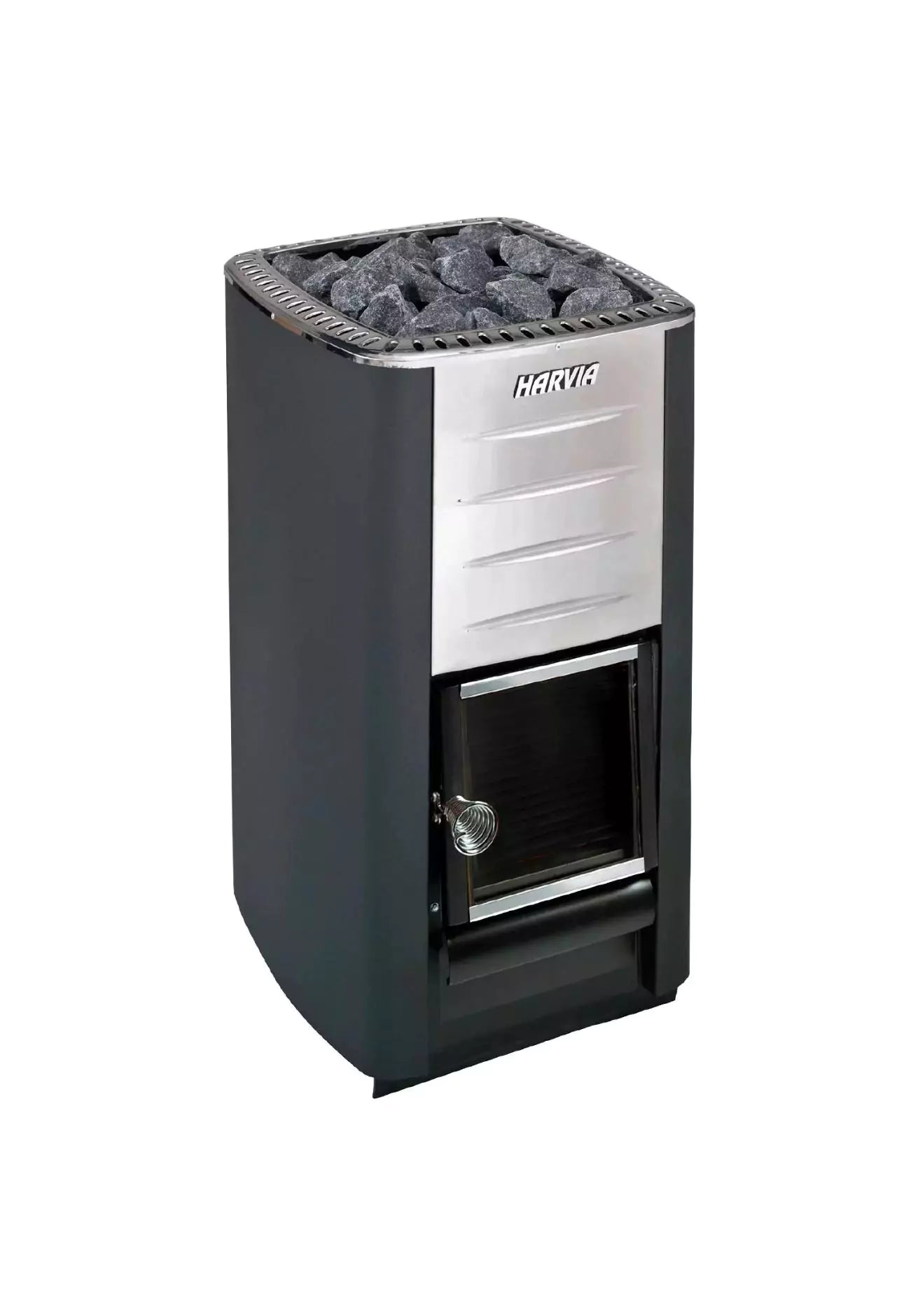
The Wood-Burning Alternative: Harvia M3 Stove
A wood-burning stove eliminates electrical cost but requires a proper chimney installation and a steady supply of firewood.
My Final Word: Plan First, Build Once
The dream of a backyard sauna is absolutely achievable. But it's a construction project, not an appliance. The success or failure of that project is determined long before you hammer the first nail. It's determined when you walk your yard and choose the location.
I have a longtime client who has a beautiful outdoor sauna right next to his pool. Before he built it, he told me his backyard was just "a place for the kids to run around." He almost put the sauna in a far corner of the yard, but we decided to create a little "wellness zone" near the pool instead. Now, he says it has completely transformed how he uses his property. He told me the best part of his day, every single day, is his hot/cold routine. He'll do 15 minutes in the 190°F sauna, then walk ten feet and jump straight into the cool water of the pool. He says the feeling is electrifying and has done more for his stress levels than anything else he's ever tried. That's the magic you can only get with a thoughtfully placed outdoor setup.
Take your time. Do your homework. Plan for the practical realities of your specific backyard. If you do that, you'll end up with a sanctuary that will serve you well for decades. If you rush it, you'll just end up with a very expensive headache.