










Sauna Heater Size & kW Calculator
Accurate sizing is critical for safety and performance. Use our Sauna Heater Sizer to determine the required Kilowatts based on your width, depth, and height, adjusted for glass and stone heat loss as well as internal or external factors. Guaranteed to deliver 175F in under 45 minutes.
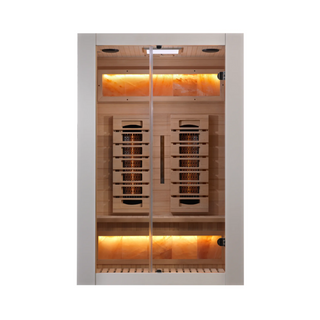
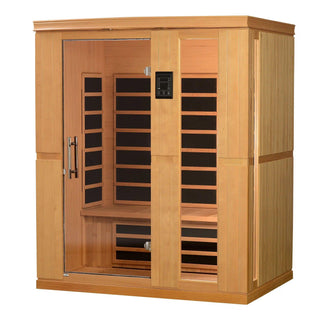
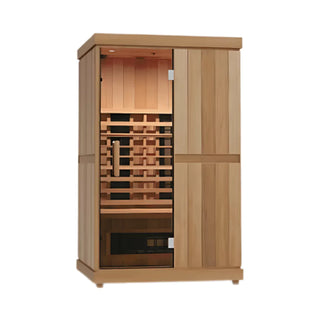
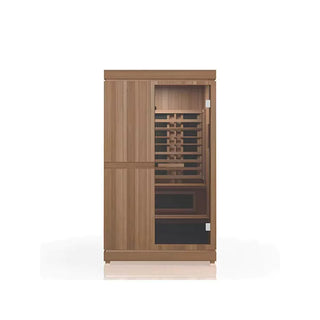
We view the modern infrared sauna as a specialized recovery tool that bridges the gap between traditional heat therapy and advanced biohacking. Unlike convection-based systems, an infrared sauna utilizes radiant wavelengths to heat the body directly, allowing for a deep sweat at more manageable ambient temperatures. Our collection is curated to prioritize low-EMF carbon and full-spectrum emitters, ensuring that your home environment remains safe while delivering the precise wavelengths required for cellular rejuvenation and muscle recovery.
- Plug-and-Play Power Support: We offer many infrared sauna models designed to run on a standard 120V/15-amp household outlet, making professional recovery accessible without the need for complex electrical renovations.
- Full Spectrum Wavelength Matrix: Our premium units utilize a hybrid of near, mid, and far-infrared emitters to provide a complete wellness profile, from skin surface rejuvenation to deep-tissue metabolic stimulation.
- Advanced Low-EMF Engineering: We prioritize infrared saunas that utilize ultra-low EMF carbon heater arrays, ensuring that your daily wellness ritual is both effective and biologically safe.
- Structural Thermal Efficiency: We utilize high-quality Canadian Hemlock and Western Red Cedar coupled with insulated cabin walls to ensure your infrared sauna reaches optimal operating temperatures quickly while maintaining energy efficiency.
Infrared Sauna Technical FAQ
Choosing an infrared sauna requires an understanding of wavelength science, electrical safety, and material performance. We have compiled these expert answers to help you navigate your selection.
Which is better, traditional or infrared sauna?
The choice between traditional and infrared saunas depends on your personal wellness goals. Traditional units offer intense heat and steam for cardiovascular benefits, while an infrared sauna provides a gentler, lower-temperature experience that we find is more effective for detoxification and direct muscle recovery.
What are the benefits of a 2-person infrared sauna?
A 2-person infrared sauna provides a spacious sanctuary for solo use or a shared wellness session. We find that the infrared heat penetrates deeper into the tissue at lower ambient temperatures, making it a comfortable, energy-efficient option for most home environments.
What type of infrared is best for a sauna?
We suggest selecting based on your needs: far infrared is ideal for deep muscle relief and detox, mid-infrared supports injury recovery, and near-infrared is most suitable for skin health and immune support. For the most comprehensive experience, we recommend a full-spectrum infrared sauna.
Are infrared saunas high maintenance?
Generally, infrared saunas are very low maintenance. Because they do not use water or high humidity, we recommend simply wiping down the benches after each session and occasionally checking the heating panels to ensure long-term performance.
Do infrared saunas use UV light?
No. Infrared light is a safe form of electromagnetic radiation similar to the sun's warmth but without the harmful ultraviolet rays. We ensure our saunas provide wavelengths that penetrate up to 1.5 inches into the body without any UV exposure.
How to pick the right infrared sauna?
We advise starting by determining your available space and required capacity. From there, explore heating technologies like low-EMF carbon vs. full-spectrum, and examine the build quality of materials like Hemlock or Cedar to ensure a lifetime of use.
Which is better, an infrared or a steam sauna?
Infrared saunas warm the body directly via radiant heat, whereas steam saunas heat the air using moisture. We find that if you prioritize respiratory health, steam is excellent, but if you want deeper muscle penetration and pain relief, an infrared sauna is the superior choice.
Which is better full spectrum sauna or infrared sauna?
Standard far-infrared saunas focus on deep tissue penetration using one wavelength. We find that full-spectrum saunas are often a better investment because they include near, mid, and far-infrared wavelengths for a wider range of biological benefits.
Which is healthier, steam or infrared sauna?
An infrared sauna is unique because it warms your body directly rather than heating the atmosphere around you. We believe this results in specific metabolic health benefits that are difficult to achieve in a traditional steam environment.
What is the healthiest type of infrared sauna?
We consider far-infrared saunas to be among the healthiest options due to their ability to provide the widest range of core health benefits, provided they are built with high-quality, non-toxic materials and low-EMF heating panels.
Do infrared saunas use a lot of electricity?
In our experience, infrared units use significantly less electricity than traditional models. Because they heat the body directly and operate at lower temperatures, they require less energy to maintain a therapeutic session.
How big is a 2-person infrared sauna?
Typically, a 2-person infrared sauna measures between 3.5 and 4 feet wide and deep. We find this size is ideal for most US bathrooms or spare rooms while providing enough bench space for two adults to sit comfortably.
Do and don'ts infrared sauna?
Always stay hydrated before and during your session. We recommend avoiding alcohol prior to sauna use. We also suggest waiting at least 30 minutes after a meal before starting a session to allow for proper digestion.
Are you supposed to wear clothes in an infrared sauna?
We generally recommend wearing minimal clothing to allow maximum skin contact with the radiant heat. If you prefer to be covered, light and breathable cotton fabrics or swimwear are the most suitable options for your session.
Do infrared saunas need 220v?
Most residential infrared saunas are designed to run on a standard 120V power supply. Whether you choose a pre-fabricated unit or a custom build, the majority of our 1 and 2-person models are plug-and-play.
Do infrared saunas need their own circuit?
Yes. We strongly advise that your sauna outlet should not be shared with other appliances to prevent circuit overloads. Most infrared saunas require a dedicated 15-amp or 20-amp outlet depending on the total wattage of the heater array.
How long will an infrared sauna last?
With proper care, a high-quality infrared sauna can last 15 to 20 years or longer. We believe that longevity is driven by the quality of construction and consistent cleaning, making your sauna a long-term wellness investment.