










Sauna Heater Size & kW Calculator
Accurate sizing is critical for safety and performance. Use our Sauna Heater Sizer to determine the required Kilowatts based on your width, depth, and height, adjusted for glass and stone heat loss as well as internal or external factors. Guaranteed to deliver 175F in under 45 minutes.
Why a 6 Person Sauna Changes the Way You Use Your Home
Most buyers start by shopping for a sauna. They end up redesigning how they use their outdoor space. A 6 person cabin fits a full group comfortably, but it works just as well for a solo morning session before work. That dual purpose matters more than most people expect.
Cedar wood sets the standard. It resists moisture, holds heat without getting dangerously hot to the touch, and carries a natural beauty that improves with regular use. The grain darkens. The scent deepens. Composite materials do not age like that.
We carry models from brands that actually build for this size class. Not stretched 4 person kits with an extra bench thrown in.
Heat Performance in a Larger Cabin
A 6 person sauna demands a heater that can push the entire space evenly to your target temperature. Undersized heating elements are the single most common mistake we see. The sauna heats slowly, the corners stay cold, and the steam quality drops.
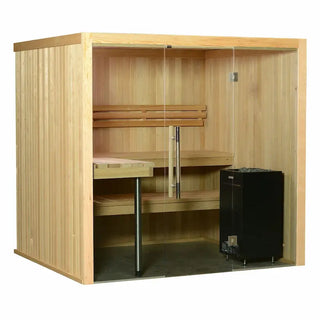
For rooms this size, we typically recommend an 8kW or 9kW electric sauna heater. HUUM and Harvia both build heaters rated for this volume. HUUM carries more sauna stones at comparable price points. That translates to softer, longer-lasting löyly, the gentle steam that defines an authentic traditional sauna experience. Harvia heats faster and has widespread US parts availability.
We recommend HUUM for anyone who prioritizes steam quality and plans to use the sauna daily. That is our position. For commercial settings or hospitality use, Harvia is the more pragmatic call.
Barrel Sauna vs. Cabin: Which 6 Person Layout Works Best?
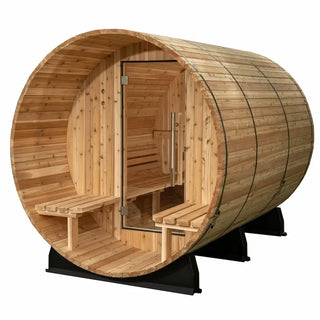
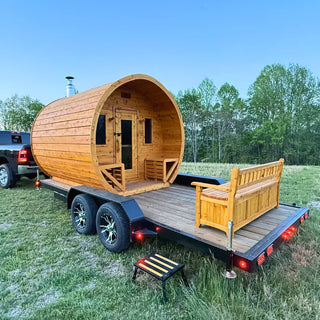
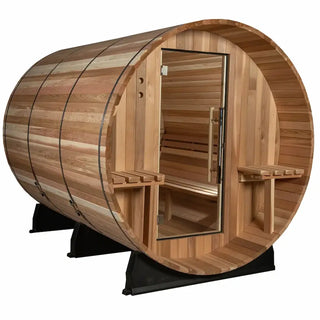
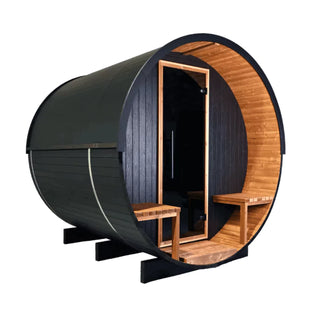
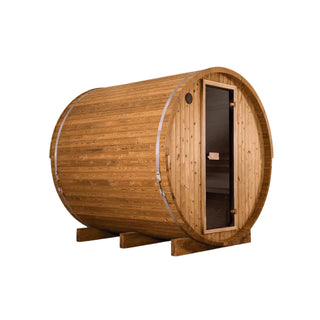
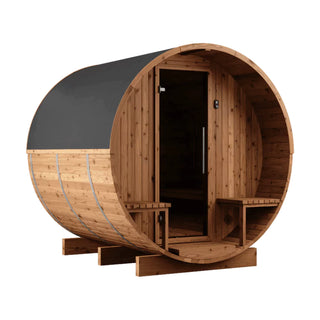
A barrel sauna looks striking in a backyard. The curved walls circulate heat efficiently, and the assembled weight sits lower than a comparable cabin. Easier placement on a deck or patio. If your outdoor space is limited or you want a strong visual centerpiece, a barrel sauna deserves serious consideration.
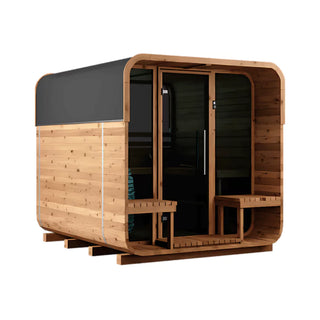
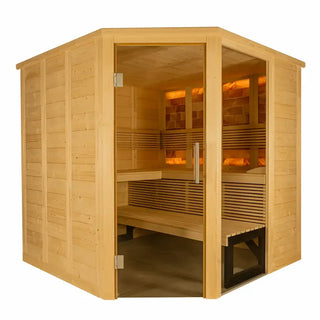
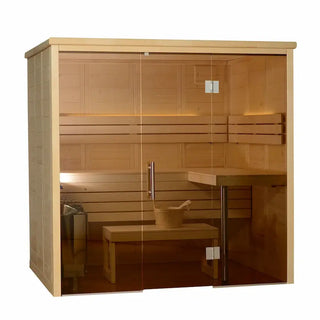
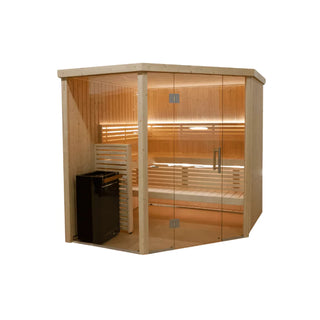
Cabin-style saunas give you more usable floor space, easier bench layouts for six adults, and better wall mounting options for your heater. Installation goes more smoothly than most buyers assume. A flat, level surface and access to a 240V circuit covers the essentials. Hire a certified electrician before you commit to placement.
Not every barrel sauna actually seats six comfortably. Ask us about interior dimensions before you buy. We will tell you what fits and what the manufacturer is generous about.
What to Look for in a 6 Person Sauna
- Materials and Durability: Cedar wood remains the best value for residential builds. It insulates well, resists rot, and requires no chemical treatment. Some models use thermally modified wood, which performs similarly but lacks the scent. Most buyers notice.
- Door and Glass: A tempered glass door lets light into the cabin, makes the space feel larger, and lets you keep an eye on the stove from outside. Every model we sell uses tempered glass rated for sauna temperatures. Look for a full-length window if natural lighting matters to you.
- Heater and Control: The heater is the heart of the room. Match it to your cubic footage, not the number of seats. Digital control panels let you set the temperature and session length before you step in. HUUM offers WiFi control on every model. Set your sauna to heat from your phone while you finish a workout.
- Safety Features: Proper ventilation, UL-listed heating elements, and an auto-shutoff timer. Non-negotiable. Every unit we sell meets or exceeds US safety standards. We do not stock brands that cut corners here.
- Bench Layout: Six adults need two-tier benching with enough depth to recline. A tight bench layout creates a steam room feel when you want a traditional sauna feel. Bench quality matters. Thin slats warp within a year.
Sauna Kit or Prebuilt: What Makes Sense?
A sauna kit gives you the wall panels, bench components, door, and heater in one shipment. You or your contractor handle assembly. For buyers who want to customize their indoor or outdoor build, a kit offers flexibility that a prebuilt cabin cannot match. Two people and basic tools can handle it. Electrical work always requires a certified electrician.
Prebuilt outdoor saunas arrive closer to complete. Less labor, faster first session. Fewer customization options and higher shipping cost due to assembled weight.
We carry both. The right choice depends on your timeline, your space, and whether you enjoy the build process. Call us and we walk you through what each option involves for your specific situation.
Most Common Questions About 6 Person Saunas
What size heater do I need for a 6 person sauna?
Most 6 person saunas require an 8kW or 9kW electric sauna heater. Calculate your room's cubic footage and match it to the heater's rated capacity. We size heaters every day. Call us with your dimensions and we confirm the right fit.
Can I install a 6 person sauna outdoors?
Yes. Outdoor saunas built from cedar wood handle weather well without chemical treatment. Place the unit on a level surface with proper drainage. A concrete pad or compacted gravel base works for most backyard installations.
How long does a 6 person sauna take to heat?
With a properly sized heater, expect 30 to 45 minutes to reach your target temperature. HUUM heaters with full stone loads take slightly longer to warm up but produce softer steam for a longer session. Harvia heaters reach temperature faster.
Do I need a certified electrician for installation?
Yes. A 6 person electric sauna heater runs on 240V and requires hardwired installation. Hire a licensed electrician. This is not a DIY job. We provide wiring diagrams and speak directly with your electrician if questions come up.
Is a barrel sauna big enough for 6 people?
Some barrel saunas advertise 6 person capacity but seat six adults tightly. Check interior bench length and cabin diameter before purchasing. We tell you honestly whether a specific model fits six comfortably or whether you should size up.
What wood works best for a 6 person sauna?
Western red cedar wood. It insulates well, resists moisture, and carries a natural beauty that synthetic materials cannot replicate. Nordic spruce and thermally modified wood work as alternatives if cedar is unavailable.
How much does a 6 person sauna cost?
Expect to invest between $3,000 and $15,000 depending on whether you choose a sauna kit, a prebuilt barrel sauna, or a custom cabin build. Heaters range from $1,500 to $4,000 depending on brand, kW output, and control features. Check our sale section for current pricing.