





Sauna Heater Size & kW Calculator
Accurate sizing is critical for safety and performance. Use our Sauna Heater Sizer to determine the required Kilowatts based on your width, depth, and height, adjusted for glass and stone heat loss as well as internal or external factors. Guaranteed to deliver 175F in under 45 minutes.
Why Sauna Enthusiasts Choose a Wood Burning Sauna Stove
Wood burning is the original way to heat a sauna. Finnish builders figured this out centuries ago. Seasoned hardwood logs burn hot, transfer energy into a heavy mass of sauna stones, and those stones radiate warmth long after the fire settles. That deep radiant heat produces real loyly – the soft, gentle steam behind every authentic sauna experience.
Electric sauna heaters deliver precise temperatures. Wood burning heaters deliver depth. You smell the fire. You hear it. The heat feels different because it is different. We recommend wood fired sauna stoves for anyone who treats sauna as a tradition, not a setting on a dial. If relaxation and ritual matter more than convenience, a wood stove is the ideal starting point.
Built for Outdoor Saunas and Off Grid Locations
No electricity required. That single fact makes wood burning stoves the only real option for outdoor saunas in remote locations where running 240V wiring is either impossible or not worth the cost. Barrel saunas on lakefront property, cedar cabins off the grid, hunting lodges an hour from the nearest utility pole. Wood handles all of it.
Every stove we carry runs on dry, seasoned firewood alone. No gas lines. No dedicated circuits. A wood fired sauna stove designed for off grid use removes the biggest installation step before it starts. For smaller saunas and compact builds, we stock models that fit tight footprints without sacrificing heat output.
Engineered for Durability and Efficient Heating
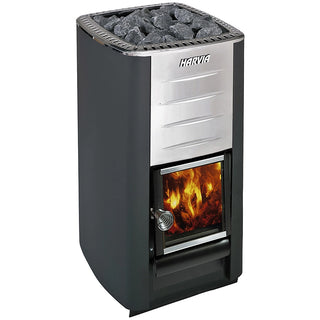
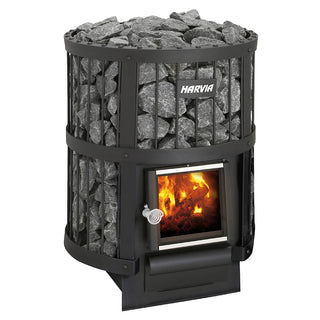
These stoves take punishment. Extreme thermal cycles, high humidity, intense heat session after session. That is why material quality matters more than marketing. The sauna stoves in our collection use heavy duty steel fireboxes and cast-iron components, engineered to survive decades of hard use. Harvia Heaters are built for long lasting performance in commercial and residential settings. HUUM Sauna Heaters combine that same durability with Estonian design awards and stone capacity that most competitors cannot match.
Efficiency counts too. Modern firebox designs with adjustable dampers improve airflow and pull more heat from less wood. Less creosote. Less waste. More warmth per log. That balance between power and combustion efficiency separates a well-engineered wood burning sauna heater from a cheap box with a chimney.
How to Choose the Right Wood Burning Sauna Stove
Size your sauna stove to your sauna room accordingly. Our sauna experts suggest 1 kW per 50 cubic feet of interior volume. Calculate the cubic footage (length x width x height) and match it to the stove’s kW rating. Glass walls, poor insulation, or high ceilings mean you should add 20% and choose a model with more capacity. Undersizing a heater is the most common mistake we see.
Stone capacity shapes your sauna experience. More sauna stones hold more thermal energy and produce softer steam. Less stone mass means a quick heat-up but sharper bursts of water vapor when you pour. HUUM loads more stone than most brands at similar kW ratings. That is our recommended starting point for anyone creating a traditional sauna built around steam quality.
For buyers who need it straightforward: Harvia for proven reliability and fast heat. HUUM for the best steam and design on the market. Both are suitable for residential and commercial installation. Do not hesitate to call us. We will size the stove for your specific build.
Rooted in Finland and Estonia
Harvia comes from Finland. HUUM comes from Estonia. Both countries treat sauna as a way of life. That heritage shows in engineering. Harvia has built wood burning sauna stoves for decades and their models remain the go-to for commercial durability. HUUM earned a Red Dot design award in 2015 and continues to elevate what a sauna stove can look and feel like. We carry both because each brand serves a different body of buyers.
Replacing an Old Sauna Stove
Thousands of wood burning saunas across the US run on stoves that are 10 to 15 years old. If your sauna room takes too long to heat or the steam has dropped, the stove is almost always the problem. A new HUUM or Harvia wood burning sauna heater will transform the experience. Better combustion. More stone capacity. Add to cart and breathe new life into an existing build. We also offer accessories like chimney kits and replacement sauna stones to complete the upgrade.
Why Buy From The Sauna Place
We are not a dropshipper. Every burning sauna stove we sell sits in our Tennessee warehouse, packed and ready to ship. Authorized dealer for every brand we carry. Full manufacturer warranties honored. If your installer has questions about chimney clearance or stove placement, our team picks up the phone. That is not something a marketplace listing can offer.
Making the right choice starts with getting honest advice. Shop the collection, add to cart, or call us for a free consultation. We size stoves every day and enjoy doing it.
Most Asked Questions About Wood Burning Sauna Stoves
Installing and operating a wood-fired sauna requires attention to chimney drafting, local permits, and timber selection. We have compiled these expert answers to help you master the art of the traditional wood sauna.
How big of a wood burning sauna stove do I need?
Use 1 kW per 50 cubic feet of room volume. Calculate your cubic footage and match it to the stove rating. A 6x8x7 sauna room is 336 cubic feet, so a 7 kW stove covers it. Uninsulated walls or glass panels increase heat loss. Add 20% in those cases. For smaller saunas under 200 cubic feet, a compact model like the HUUM Hive Mini keeps the footprint tight. Call us with your dimensions and we will confirm the right size.
Is a wood burning sauna heater better than electric?
They solve different problems. Electric heaters give you push-button control and work in any space with a 240V circuit. Wood burning heaters produce deeper radiant heat, require no electricity, and deliver the fire-and-steam ritual that most sauna enthusiasts prefer. For outdoor saunas and remote locations, wood wins outright. For a basement or condo build, electric makes more sense.
How long does a wood fired sauna take to heat up?
Plan for 30 to 60 minutes in a standard residential sauna room. That time heats more than just air. The wood walls, ceiling, and sauna stones all need to absorb energy before the heat feels right. Dry, kiln-dried hardwood logs cut that time noticeably compared to softwood or wet timber. A well-insulated room with a properly sized stove sits at the quick end of that range.
Do I need a permit to install a wood burning sauna stove?
In most US jurisdictions, standalone outdoor structures under 120 square feet do not require a structural permit. However, installing a wood burning appliance will sometimes require a fire safety inspection. Your local building department will check chimney height and clearance-to-combustible distances per NFPA 211. Check before you build. This step is not optional.
What is the best wood to burn in a sauna stove?
Hardwoods. Birch, oak, maple, and ash burn hot, hold a long coal bed, and produce less creosote than softwoods. Pine works fine for kindling but burns too fast and too dirty for the main fire. Keep your logs seasoned to under 20% moisture. Wet wood wastes heat and gunks up the chimney. Birch is the traditional Finnish choice and our personal favorite for the perfect balance of burn time and aroma.
How do I ventilate a wood burning sauna?
Follow a low-high diagonal pattern. Place the intake vent near the floor below the stove to feed oxygen to the fire. Position the exhaust vent high on the opposite wall to cycle out stale air. This creates natural airflow convection that keeps the sauna room safe and the burn clean.
Does The Sauna Place offer support with installation?
We do. Our team walks installers through chimney clearance, venting layout, and stove placement over the phone. We are not a marketplace listing. Every stove ships from our Tennessee warehouse with full manufacturer warranty, and our support team knows these products inside out. Do not hesitate to call before or after your purchase.
How to use a wood stove in a sauna?
Using a wood stove is a tactile process: you load dry timber into the firebox, initiate the fire, and manage the burn for approximately 45 to 60 minutes. We emphasize the importance of monitoring the damper to ensure the fire is efficient; a clear flame indicates a clean burn, which is necessary to prevent creosote buildup in your chimney.
How to choose a sauna stove?
We suggest selecting your stove based on the cubic volume of the hot room (LxWxH) and the specific materials of your build. For rooms with high heat loss, such as those with glass walls, we recommend upsizing the stove's kW rating. You should also evaluate whether you prefer a high stone capacity for soft steam or a more compact stove for rapid heat-up times.
How to start a fire in a wood burning sauna?
Success begins with ensuring the chimney and ash pan are open for drafting. We recommend building a bed of kindling and dry firewood on top of a few larger foundation logs. Once the kindling is lit and the fire is established, you can adjust the damper to control the intensity of the burn, adding more firewood only as needed to maintain your target temperature.
How to properly ventilate a wood-burning sauna?
Effective ventilation is critical for both oxygen supply and moisture management. We suggest positioning an intake vent near the floor, preferably below the heater, to draw in cool, fresh air. An adjustable outflow vent should be placed on the opposite wall, closer to the ceiling, to allow warm air and CO2 to escape, creating a healthy convection loop.
How long does it take to heat a wood fired sauna?
In a standard residential installation, a wood-fired sauna typically takes 30 to 60 minutes to reach optimal heat. We note that the exact time is influenced by your timber quality, the insulation of the sauna cabin, and the ambient temperature of your local environment—factors that we always consider when sizing a stove for our clients.
How do you maintain a wood fired sauna?
We suggest a routine that starts with a pre-season check of the firebox and chimney for any obstruction or creosote. Regularly inspect and clean the sauna stones, as broken or dusty stones can impede heat transfer. Finally, maintain the benches by scrubbing them with water to remove perspiration salts, which helps extend the lifespan of the interior timber.
What is the best temperature for a wood fired sauna?
For a traditional Finnish experience, we find the ideal temperature range is between 160 and 194 degrees Fahrenheit. This range ensures that the stones are hot enough to vaporize water instantly for steam (löyly) while maintaining a safe and restorative environment for sessions lasting 15 to 20 minutes.
What is the best wood to burn in a sauna stove?
We recommend hardwoods such as birch, ash, and oak for their ability to burn hot and provide a long-lasting coal bed. While softwoods like pine can be used for initial kindling, they burn too quickly and can create more resin buildup in the chimney, making hardwoods the premier choice for regular sessions.
Can you use a wood-burning stove in a sauna?
Yes. Wood-burning stoves are the original method of sauna heating and remain the preferred choice for enthusiasts who value a traditional ambiance. They provide a unique radiant heat profile and a crackling firelight ambiance that modern electric heaters simply cannot replicate.
How to vent a wood burning sauna?
Ventilation for wood stoves should follow a "low-high" diagonal pattern. By placing an intake vent at the base of the stove and an exhaust vent high on the opposite wall, we ensure that fresh oxygen is pulled into the room while stale, hot air is naturally cycled out, preventing the cabin from becoming "stuffy" or uncomfortable.
What is the difference between a smoke sauna and a wood sauna?
The primary difference is the venting system. A traditional wood sauna uses a chimney to vent smoke immediately outside. In contrast, a smoke sauna (savusauna) has no chimney; the smoke stays inside the room during the heating process, heating the stones directly and leaving a layer of soot on the benches before being vented out prior to use.
Can you heat a sauna with wood?
Yes, heating with wood is the definitive way to experience a traditional sauna. We suggest using seasoned logs with a humidity level below 20% to ensure a clean, efficient burn. Hardwoods like oak and maple are significantly better than spruce or pine for heating the stone mass quickly and maintaining high temps.
How big of a sauna stove do I need?
We follow the standard technical rule of 1 kW of stove power for every 50 cubic feet of room volume. For instance, a 500-cubic-foot room would require a 10 kW stove. We also adjust this calculation for extra thermal loss, such as uninsulated glass walls, to ensure the heater isn't overworked.
Are wood fired saunas good for you?
We believe the deep radiant heat from a wood stove is exceptionally beneficial for muscle tension and cardiovascular health. Regular sessions have been linked to improved respiratory function and immune system support, providing a holistic wellness ritual that supports overall well-being.
How long do wood burning saunas take to heat up?
Depending on the desired temperature and the size of the room, we estimate a warm-up time of 60 to 90 minutes. This ensures not just that the air is hot, but that the wood walls and the heavy stone mass have reached a thermal equilibrium, providing a soft, radiating heat during your session.
How much does it cost to run a wood fired sauna?
The operating cost is minimal and depends primarily on the price of firewood. We estimate that an average session requires between 10 and 15 kg of wood. This makes it an extremely cost-effective option for homeowners compared to the electrical usage of high-kilowatt traditional electric heaters.