






Sauna Heater Size & kW Calculator
Accurate sizing is critical for safety and performance. Use our Sauna Heater Sizer to determine the required Kilowatts based on your width, depth, and height, adjusted for glass and stone heat loss as well as internal or external factors. Guaranteed to deliver 175F in under 45 minutes.
How to Choose the Right Barrel Sauna
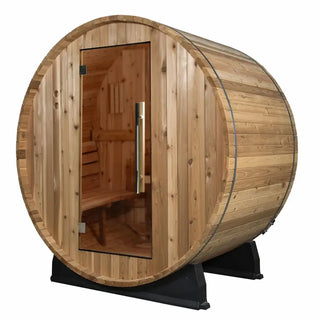
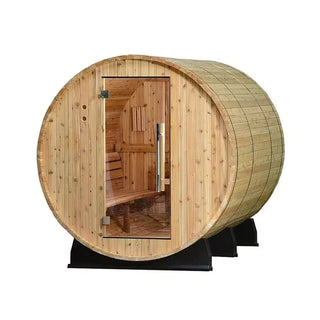
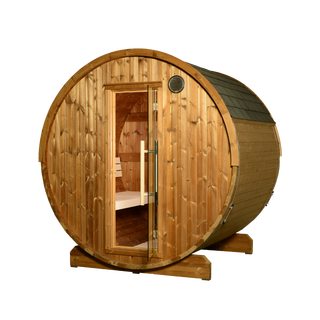
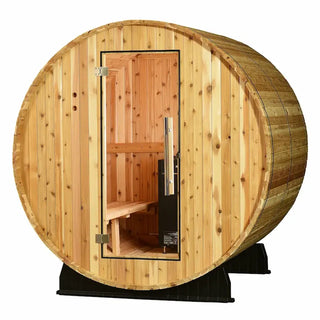
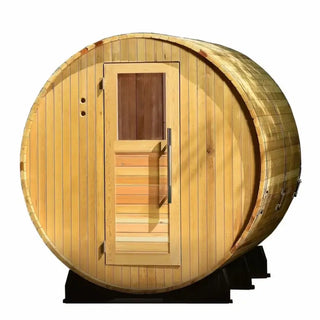
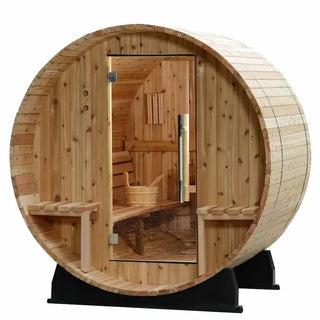
Barrel saunas are not just a style choice. The round interior eliminates cold corners, drives natural air circulation, and wraps heat and steam evenly around the bathers in a way a box cabin simply cannot.
That is why the sauna session in a barrel feels different. The steam moves. The deep penetrating warmth builds from the walls inward, and the authentic sauna experience runs on less power than most buyers expect.
- Efficient Heating by Design: The cylindrical shape drives the convection. Hot air rises from the sauna heater, hits the curved ceiling, and rolls back down over your body. No cold corners. No heat pooling at the top. Whether you run an electric heater or a wood burning stove, the interior space works with your heat source instead of against it. That is the core difference between a barrel and a traditional sauna cabin. The rounded walls also act as a natural ergonomic backrest. Longer sessions, more relaxing. Nothing else required.
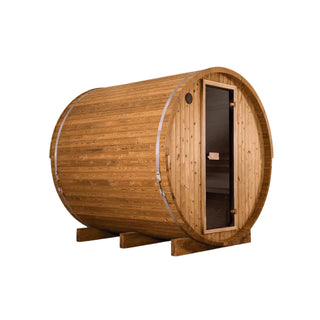
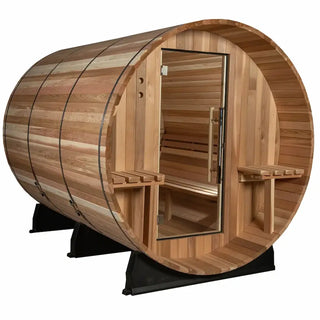
- Outdoor-Ready Materials: Western Red Cedar is the US benchmark for outdoor sauna construction. Rot-resistant, dimensionally stable, aromatic. It has earned that reputation over decades. Nootka builds their barrels entirely from naturally hydrophobic Western Red Cedar with no glues or chemicals. Worth knowing if you are sweating in an enclosed space for 30 minutes at a time. Thermally modified Nordic Spruce takes a different approach. The baking process removes the sugars that attract insects and cause warping, producing a harder, darker board that handles humidity better than untreated pine or spruce. Both are solid choices. They suit different climates and different aesthetics.
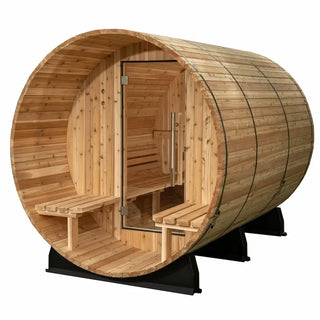
- Elevated Cradle Bases: Every unit sits on polymer or wood cradles. That gap underneath keeps airflow moving under the barrel and stops moisture from wicking into the base staves. It is the single biggest factor in long-term wood health. Place the cradles on crushed gravel or a paver patio, not on grass or mulch. Most kits include shingles for roof weather protection. Check that yours does before ordering.
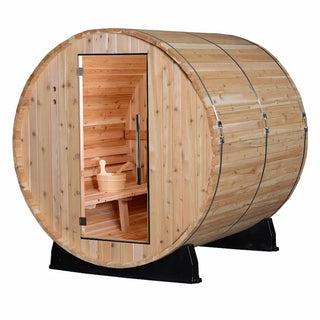
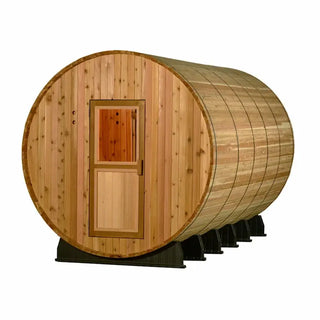
- Flexible Sizes & Capacities: Our collection runs from compact 2 person saunas (< ahref="/products/almost-heaven-6-x-4-salem-2-person-barrel-sauna">Almost Heaven Salem, Almost Heaven Vienna or Thermory Barrel No. 55) to spacious 4 person and 6 person barrels (Heritage Lux Vulcano, Thermory Barrel No. 63 or Harvia Magnus) with porches. For the best bench height and heat circulation, look for a barrel diameter of 85 inches or more. The barrel geometry scales well. A 6 person unit still heats faster than a box cabin of equivalent seating capacity. Pricing starts at $3,000 to $5,000 depending on size and material.
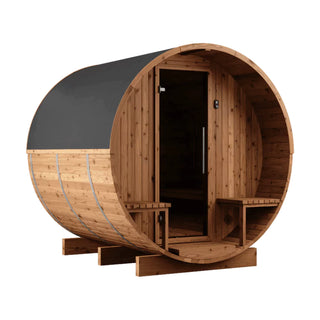
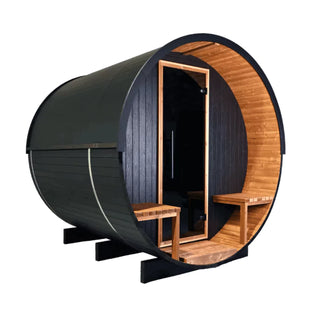
- Panoramic and Privacy Options: Choose a fully enclosed barrel for maximum heat retention, or a panoramic barrel sauna with tempered glass door panels to connect with your landscape. The Dundalk Leisurecraft Panoramic features a unique acrylic bubble rear window, one of the most distinctive designs in the category. Panoramic glass adds natural lighting. Works particularly well on a backyard patio or elevated deck with a view. Almost Heaven and Redwood Outdoors both carry both configurations.
- Flat Pack Installation: Every kit arrives as a flat pack with pre-cut staves and hardware included. We deliver to your door. Assembly typically takes half a day with two people and basic tools. Most homeowners handle it without prior experience. If you choose a wood burning heater with a chimney or need electrical work for an electric heater, hire a licensed electrician. The sauna itself needs no heavy site preparation. A level gravel pad is enough. Skip the vapor barrier too. Single-layer wood construction breathes naturally.
Most Common Questions About Barrel Saunas
Placement, materials, running costs. The questions we get every week.
Are barrel saunas worth it?
Yes. We recommend them over box cabins for most outdoor installations without hesitation. The cylindrical design produces 23% less air volume than a box sauna of the same footprint, which means faster heat-up and lower electricity costs. They also disassemble and relocate more easily than built-in structures, thanks to the tension band construction. That flexibility matters more than most buyers realize until they move house.
Are barrel saunas expensive to run?
Running costs typically sit at $0.50 to $1.00 per hour depending on your local kWh rate. In cold climates like the Midwest or Northeast, choose a model with staves 1.5 inches or thicker, or size up your heater. A wood burning stove eliminates electricity costs entirely if you have access to seasoned firewood.
Are barrel saunas good for your health?
Regular sauna use is linked to a 20% reduction in heart disease risk at 2 to 3 sessions per week. Blood pressure drops. Dementia risk falls. Those numbers come from long-running Finnish population studies rooted in sauna culture that stretches back centuries. Sleep, skin health, immune function. The proven health benefits stack up fast. A barrel delivers all of it. The curved walls roll löyly, created when you pour water over hot stones to create steam, down over your body rather than trapping it near the ceiling. Better circulation than most box cabins produce. We think of it as a wellness space, not just a backyard structure. That distinction shows up in how you feel after three months of regular use.
What is the lifespan of a barrel sauna?
Western Red Cedar and thermally modified wood barrels last 15 to 25 years with basic maintenance. Two things determine longevity more than anything else: keep the roof shingles intact and keep the cradle base elevated off wet ground. Everything else is secondary.
High-temperature baking drives the sugars out of the wood. What remains resists insects, resists rot, and stays dimensionally stable across humidity extremes. It outperforms untreated cedar in demanding climates. Almost Heaven and Redwood Outdoors both offer thermally modified options. Worth the upgrade in high-humidity regions.
Is a barrel sauna good for outdoor use?
It is the best outdoor sauna format we carry. The round shape sheds snow and rain naturally, handles snow loads without structural risk, and needs none of the heavy waterproofing a flat-roof cabin requires. A layer of snow on top during a winter session actually adds insulation. The barrel works with winter conditions rather than against them.
Where to put a barrel sauna?
On a permeable, flat surface. Crushed gravel 3 to 4 inches deep drains instantly and keeps the cradles dry. A paver patio works too. Keep at least 3 feet of clearance around the unit for ventilation and fire safety, especially with a wood burning stove. Never place cradles directly on grass, mulch, or soil. Moisture wicking into the base staves is the most common cause of early wood failure.
What is the best wood for a barrel sauna?
Western Red Cedar (WRC) for most US buyers. Proven, aromatic, naturally rot-resistant. Thermally modified Nordic Spruce for high-humidity climates or buyers who prefer a harder, darker aesthetic. Untreated pine or spruce outdoors is a mistake. We have seen enough replacements to say that plainly.
What is the best base for a barrel sauna?
Crushed gravel. Drainage matters more than solidity for a barrel sauna base. Three to four inches deep, level, and it costs less than concrete. Installs faster too.
Can I put a barrel sauna indoors?
Technically yes. We do not recommend it. Barrel saunas rely on wood stave expansion to seal the gaps between boards, the same principle as a wine barrel. In a climate-controlled indoor environment the wood dries out, shrinks, and gaps appear. They belong outside.
Do barrel saunas work in winter?
Well. The solid wood staves insulate effectively and snow accumulation on the barrel surface adds R-value during your session. In extreme cold below minus 10 degrees Fahrenheit, size up your heater by one power bracket to compensate for heat loss through the door seals. Otherwise the barrel handles winter without intervention.
Electric or wood burning: which is right for a barrel sauna?
Electric heaters give you Wi-Fi control, precise temperature, and relaxation on a schedule. Wood burning stoves produce deeper, more variable heat tied to the ritual of building and managing a fire. That ritual is the heart of traditional sauna culture. If your site has electrical access, electric is the practical choice. No power source near the backyard? A wood burning stove with a chimney solves it cleanly. We lean toward wood burning for anyone who wants the full experience. Electric for everyone else.
What accessories should I consider for my barrel sauna?
Start with a bucket and ladle for pouring water over the hot stones. Add interior lighting if the kit does not include it. A changing room or porch extension makes a real difference for larger saunas, especially in cold weather. Check ventilation before you order. Proper air circulation keeps sessions comfortable and the wood healthy over time.