





Sauna Heater Size & kW Calculator
Accurate sizing is critical for safety and performance. Use our Sauna Heater Sizer to determine the required Kilowatts based on your width, depth, and height, adjusted for glass and stone heat loss as well as internal or external factors. Guaranteed to deliver 175F in under 45 minutes.
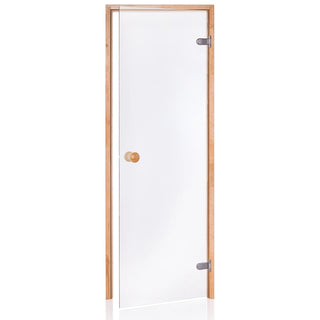
We view the sauna door as the most critical mechanical component of your build, acting as both the gatekeeper of thermal efficiency and the primary safety exit. Our collection features doors specifically engineered to withstand extreme 100°F+ temperature differentials and high humidity without warping or delaminating. From modern all-glass designs that open up a space to classic Western Red Cedar frames, we prioritize durability, visibility, and structural integrity session after session.
- Thermal Resilience: We offer 8mm to 10mm tempered safety glass and moisture-smart cedar frames that handle intense heat cycles gracefully.
- Precision Fit: Our pre-hung options utilize durable Alder or Cedar jambs to ensure a square, secure fit and a reliable vapor seal.
- Accessibility Standards: We provide ADA-compliant 36" wide doors featuring low-profile thresholds and specific clear opening clearances for inclusive wellness spaces.
- Optimized Airflow: Each design supports passive ventilation through essential gaps at the bottom, drawing in fresh air as hot air rises.
- Safety Engineering: We strictly provide outward-swinging doors with heat-resistant hardware to ensure safe, unobstructed exit in any scenario.
Frequently Asked Questions for Sauna Doors
Choosing the right door involves more than just aesthetics; it requires understanding rough openings, hinging requirements, and safety codes. We have compiled these authoritative answers to ensure your entry is as functional as it is beautiful.
Does my sauna door have to be 36 inches wide to be ADA compliant?
In the US, the ADA requires a minimum clear opening width of 32 inches. While a 32" door may seem sufficient, we find a 36" door is the industry standard to ensure that once the stop and jamb are factored in, the "clear path" remains fully accessible.
What is the maximum threshold height for an ADA sauna door?
To meet ADA standards, the threshold cannot exceed 1/2 inch and must be beveled. We recommend premium ADA doors designed without a bottom frame or with a low-profile saddle to allow for a smooth roll-in transition.
Can an ADA sauna door swing inward?
No. For safety and compliance, we require all sauna doors—especially ADA models—to swing outward. This ensures that if a bather needs assistance, the door cannot be blocked from the inside by their body.
Is a "Self-Closing" hinge required for commercial ADA saunas?
Yes, in many US jurisdictions. We utilize self-closing hinges to ensure the door doesn't stay ajar, meeting both fire safety requirements and heat-retention needs for efficient heater operation.
What is the difference between "Door Size" and "Rough Opening"?
The Door Size is the actual slab measurement. The Rough Opening is the "hole" framed in the wall. We emphasize this extra 2–3 inches of space is critical for plumbing the jamb and allowing for wood expansion under high heat.
Why is a "Pre-Hung" door better for a DIY sauna build?
A pre-hung door arrives already set in its jamb. We suggest this to eliminate the difficult task of "squaring" a heavy slab in a high-heat environment, ensuring the magnetic latch or roller-latch aligns perfectly on the first try.
How deep should my sauna door jamb be?
Standard US walls use 2x4 studs with 1/2" T&G cedar, requiring a 4 7/8" jamb. If you are building a 2x6 wall for extra insulation, we recommend a custom jamb extension to ensure the trim sits flush against the wall.
Do I need to leave a gap at the bottom of the sauna door?
Yes. A 1/2" to 1" gap at the bottom is essential for passive ventilation. We use this gap to allow cool, fresh air to be drawn into the sauna as hot air rises, preventing a "stuffy" environment.
Is tempered glass mandatory for sauna doors in the US?
Absolutely. Per IRC Section R308, we strictly provide Tempered Safety Glass for any sauna location. This ensures that if the glass breaks, it crumbles into small pebbles rather than sharp shards.
What is the benefit of "Bronze" vs. "Clear" glass?
Clear glass maximizes light and makes small saunas feel larger. We find that Bronze or "Smoked" glass provides a layer of privacy while still allowing the bather to see out for safety.
Why does my glass sauna door have a "Metal-Wood" handle?
We use this for safety and comfort. The metal side is on the exterior for a modern look, while the wooden side is on the interior because metal would become too hot to touch at 190°F.
Can a full glass door handle the heat of a traditional sauna?
Yes, provided it is 8mm to 10mm thick. We utilize thick tempered glass designed to handle the massive temperature difference between the hot interior and the cool exterior without cracking.
Why is Western Red Cedar the preferred frame material?
Cedar has the lowest thermal conductivity of any sauna wood. We recommend it because it stays cool to the touch, smells incredible when heated, and is naturally resistant to mold and rot caused by steam.
What is the advantage of an "Alder" jamb?
Alder is a popular hardwood alternative that is very stable and resists warping. We find its light, honey-toned grain provides a beautiful designer contrast when paired with all-glass doors.
How do I maintain the wood on my sauna door?
The interior should be left raw to allow the wood to breathe. We suggest applying a water-based sauna sealer strictly to the *exterior* face of the jamb to protect it from the humidity of the bathroom or pool area.
Why is "Tongue-and-Groove" construction important for a door frame?
Standard frames can warp due to dry-to-wet cycles. We utilize T&G construction because it locks the wood together, providing much better structural stability than flat frames.
Does an ADA door cost significantly more than a standard door?
In our experience, ADA-compliant doors are typically 20–30% more expensive due to the extra-wide frame and larger tempered safety glass required to meet specific building codes.
Why is my sauna door leaking heat?
We recommend checking the Hinge Adjustment. Over time, heavy doors can sag; most of our premium doors feature adjustable hinges that allow you to "re-square" the door to restore a perfect vapor seal.
Can I use a standard interior home door for my sauna?
Never. We caution that a standard hollow-core door will warp, delaminate, and off-gas toxic glues when exposed to sauna heat. You must use a purpose-built sauna door.
Should I choose a "Left" or "Right" hand swing?
This depends on your heater placement. We suggest swinging the door so it follows the "natural path of travel" into your cool-down area and doesn't open directly into the heater.