












Sauna Heater Size & kW Calculator
Accurate sizing is critical for safety and performance. Use our Sauna Heater Sizer to determine the required Kilowatts based on your width, depth, and height, adjusted for glass and stone heat loss as well as internal or external factors. Guaranteed to deliver 175F in under 45 minutes.
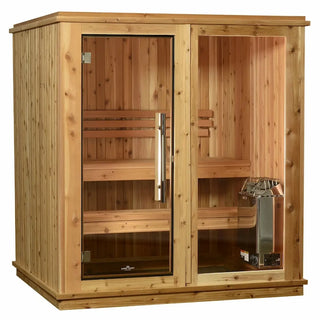
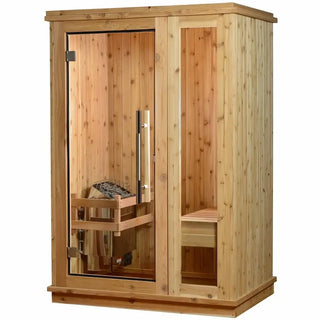
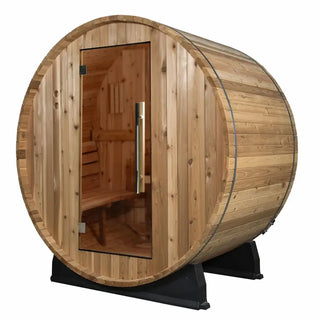
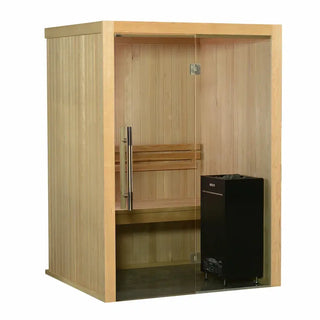
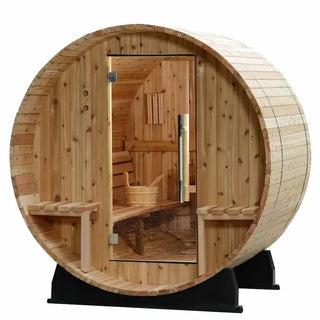
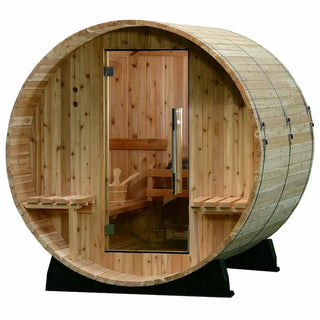
We view Western Red Cedar as the benchmark material for high-performance sauna construction. Beyond its iconic aroma, cedar possesses a unique cellular structure that allows it to remain comfortable to the touch while resisting the warping and decay that often plague lesser softwoods. Our collection focuses on premium, A-grade cedar saunas that utilize this wood's natural antimicrobial properties and moisture resistance to create a wellness environment that is as durable as it is restorative.
- Natural Thermal Stability: We prioritize cedar saunas because the wood naturally resists shrinking and expanding, ensuring that ball-and-socket joints and tongue-and-groove panels maintain a tight, energy-efficient seal over decades of use.
- Antimicrobial Integrity: We utilize Western Red Cedar specifically for its ability to resist fungi and bacteria growth in high-humidity environments, keeping your sauna cabin healthy and low-maintenance.
- Aromatic Performance: We ensure our cedar units provide an authentic sensory experience, as the wood's natural oils are slowly released during heating to create the signature atmosphere of a traditional Nordic retreat.
- Structural Longevity: We offer cedar sauna kits engineered with thick lumber, providing the density required for superior heat retention and a lifespan that frequently exceeds thirty years in both indoor and outdoor settings.
Most Asked Questions About Cedar Saunas
Selecting a cedar sauna involves choosing the right grade of wood and understanding how it performs under heat. We have compiled these expert answers to help you navigate your selection.
What grade of cedar do you use for a sauna?
We utilize Clear Red Cedar (A or B and Better Grade) for our premium units. This grade is hand-selected to be mostly free of knots, ensuring a smooth surface and structural stability. While completely knot-free vertical grain options exist, A-Grade cedar provides the best balance of luxury and value for most home wellness projects.
What is the best cedar for a sauna?
We find that Western Red Cedar is the ideal choice for sauna benches and interiors. Because it is an evergreen coniferous tree from the cypress family, it does not secrete resin and stays cool to the touch even at high temperatures, making it safer and more comfortable than other species.
What is the most rot resistant cedar?
Western Red Cedar is widely considered the most rot-resistant species available. It contains natural oils that protect the wood from decay, insects, and moisture damage. This makes it a superior choice over Eastern varieties for outdoor sauna installations in variable US climates.
What is the most durable cedar?
Yellow Cedar is noted for having slightly higher impact resistance and strength due to its slow growth and dense ring structure. However, for the specific thermal cycles of a sauna, Western Red Cedar remains the industry standard for its unique blend of durability and heat management.
What sizes and prices are available for cedar barrel saunas?
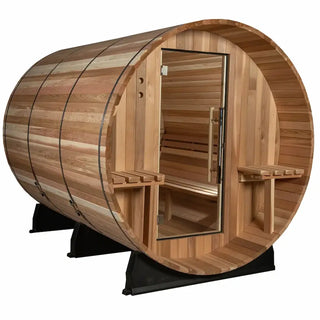
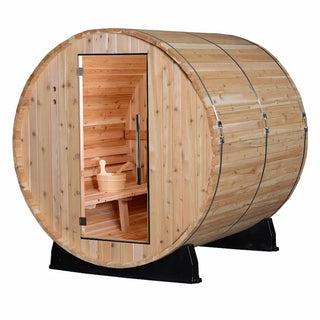
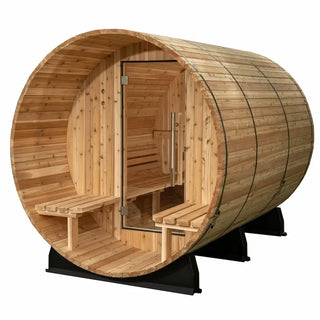
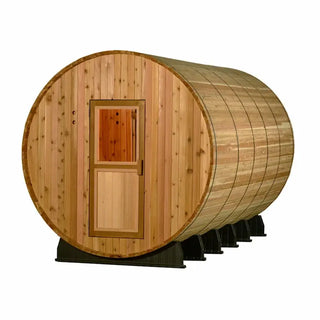
We offer cedar barrel saunas in a range of sizes, from compact 2-person models to large family units with changing rooms. Prices typically begin at approximately $5,350 and can reach over $10,999 for premium configurations with extended porches and high-output heaters.
Can you leave cedar untreated?
Yes, cedar can be left untreated. While the wood will eventually weather to a silver-gray hue due to sun and moisture, its natural oils will continue to provide resistance to rot. However, we recommend applying a light treatment to the exterior if you wish to preserve the original wood color over time.
Is cedar or thermowood better for sauna?
Both are high-performance materials. We find that Thermowood offers a slight edge in dimensional stability and rot resistance due to its heat-treatment process, while Cedar is often preferred for its classic aroma, rustic aesthetic, and natural antimicrobial properties.
Is cedar or hemlock better for sauna?
The choice depends on your priorities. We recommend Hemlock for those who want a light-colored, even texture that is hypoallergenic and holds heat well. We recommend Cedar for those seeking a rich aroma, natural moisture resistance, and the timeless look of a rustic spa.
What lasts longer, cedar or hemlock?
In terms of longevity, Cedar generally has an edge. Its natural resistance to insects and decay allows it to last thirty years or more, even when exposed to harsh outdoor weather. Hemlock is very durable for indoor use but lacks the same level of inherent decay resistance for outdoor environments.
Can you build a sauna without cedar?
Yes. While cedar is a premium choice, other softwoods like Hemlock, Aspen, or Poplar are excellent alternatives that can expand and contract without cracking. Rough pine is a budget-friendly option, though we find it does not match the long-term lifespan of a dedicated cedar or thermowood build.