








Sauna Heater Size & kW Calculator
Accurate sizing is critical for safety and performance. Use our Sauna Heater Sizer to determine the required Kilowatts based on your width, depth, and height, adjusted for glass and stone heat loss as well as internal or external factors. Guaranteed to deliver 175F in under 45 minutes.
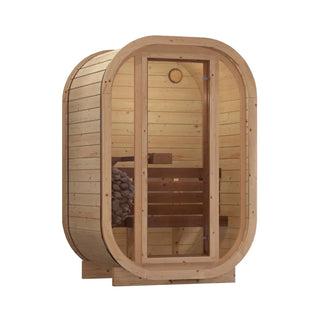
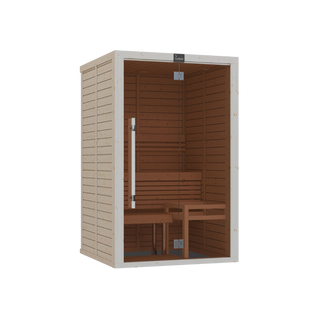
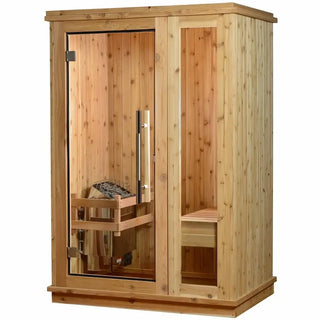
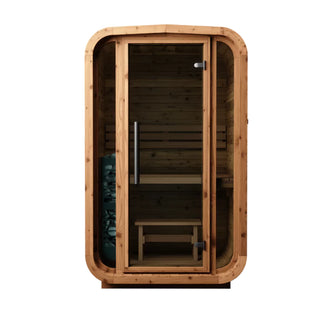
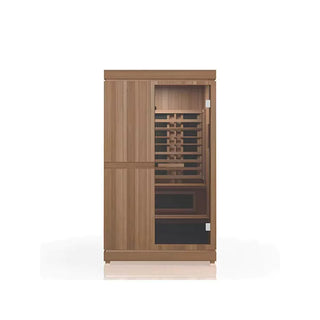
Why a One Person Sauna from The Sauna Place
We built this collection for customers who want a daily sauna habit, not a weekend novelty. A home sauna that fits in a 3x3 foot space and heats in minutes changes how often you actually use it. That is the point.
Every 1 person sauna we stock has been tested for heat retention, wood quality, and build consistency. No dropshipped units. No mystery brands with a logo and a landing page.
We carry models built in red cedar and hemlock because those woods handle repeated heat cycling without warping, cracking, or off-gassing. Red cedar is the heating material of choice for a reason: it resists moisture, stays cool to the touch, and smells like a sauna should.
Infrared vs. Traditional
Infrared saunas use far infrared heating panels to warm your body directly at a lowest temperature range of 120°F to 140°F. The air stays breathable. Sessions run 30 to 45 minutes. You sweat hard without the intense air heat that makes traditional rooms difficult to sustain.
Traditional units push the highest temperature range past 170°F using an electric heater loaded with stones. Shorter sessions. More intense. Different experience entirely.
We take a position: for a personal wellness retreat used four to five times a week, infrared wins on convenience. You plug into a standard household outlet, press the control panel, and the cabin is ready. No electrician. No 240V circuit. No 45-minute preheat.
For customers who want steam and ritual, traditional is the right call. Just budget for the wiring.
What Ships with the Unit
Every model includes a tempered glass door, interior LED light, and built-in ventilation. Most infrared builds come equipped with a touch control audio system, bluetooth speakers, and chromotherapy lighting as standard.
- Bluetooth Audio: The bluetooth connection runs through a built-in BT speaker panel.
- Chromotherapy Lighting: Cycles color temperatures inside the cabin for mood and wellness benefits.
- LED Reading Light: Available on select models for reading during longer infrared sessions.
- LCD Display: The control panel shows temperature, time, and session status.
- Tempered Glass Door: Lets light into a compact cabin and keeps a small space from feeling closed. Our glass carries temperature protection ratings built for sauna-grade heat cycling.
Wood and Build Quality
We select red cedar and hemlock as the main material for every cabin. Both perform under sustained heat and moisture. Cedar outperforms on scent and natural resistance. Hemlock is dense, stable, and energy efficient in retaining cabin temperature.
Panels arrive with PP corner guard protection and compartment cardboard packaging to prevent shipping damage. The seat load is rated for consistent daily use.
Ventilation is not optional. A proper ventilator scoop or built-in air channel prevents moisture buildup, protects the wood, and keeps air circulation consistent at high temperatures. Every model we sell includes ventilation designed for the specific cabin volume.
What to Know Before You Purchase
- Space and Dimensions: Most 1 person saunas occupy a 3x3 or 3x4 foot footprint. Leave 6 to 12 inches of overhead clearance for assembly. Confirm the door can swing open without hitting walls or furniture. These units fit in a bathroom, basement, or bedroom. Measure the room and the doorway. A common mistake is forgetting to check access for the wall panels during assembly.
- Electrical: Most far infrared models plug into a standard household outlet. No special wiring. No electrician. Traditional heaters require a dedicated 240V circuit. Do not install one yourself. A licensed electrician handles this. Budget for it before you purchase.
- Easy Setup: Prefab kits take 1 to 3 hours. One person can do it. Infrared units use latch systems that snap together without tools. Traditional kits may need a cordless drill to secure panels. The heaviest components are the glass door and back wall. Take your time. Hassle free is the goal, not speed.
- Shipping and Delivery: Free shipping on every unit. Your sauna arrives via freight carrier. Search your confirmation email for tracking details. If access to your house or apartments presents challenges, contact us before checkout so we can coordinate.
- Price and Running Cost: Infrared models range from $1,500 to $3,500 on the market. Operating cost sits between $0.50 and $1.00 per hour session. You only power it when you use it. That makes a 1 person sauna one of the most energy efficient wellness investments you can install in your home.
Health and Wellness Benefits
A daily sauna routine does measurable things to your body. The heat drives sweat. Sweat supports blood circulation and helps your skin cells turn over faster. Consistent use can promote sleep quality, reduce stress, and support recovery after training.
The wellness benefits are not theoretical. They show up in how you feel at night and how you move the next morning.
This is not a luxury item. It is a health tool with a small amount of floor space and a real impact on well being. Infrared light at therapeutic temperatures supports the body without the intensity that limits session length. That is why customers use a 1 person infrared sauna daily, not once a week.
We carry models that two people occasionally test together on the bench, but these cabins are purpose-built for one. The only part of the equation that matters is whether you use it. A personal sauna in your own space removes every barrier.
Wellness purchases may be HSA/FSA eligible. Ask us.
FAQ: Most Common Questions About 1 Person Home Saunas
How much space does a 1 person sauna require?
Most fit in a 3x3 or 3x4 foot footprint. Plan for 6 to 12 inches of overhead clearance for assembly and enough room for the door to swing open fully.
How much does a 1 person infrared sauna cost?
Infrared models typically range from $1,500 to $3,500. Traditional units cost more due to the electric heater and the licensed electrician needed for 240V wiring.
Do 1 person saunas require special wiring?
Most 1-person infrared models are designed for standard 120V outlets and can be plugged in directly. However, traditional sauna cabins — even at the 1-person size — often require a dedicated 240V circuit installed by a licensed electrician.
Is infrared better than traditional for a 1 person sauna?
Infrared offers instant-on convenience and deep heat at lower air temperatures of 120°F to 140°F. Traditional saunas provide intense air heat above 170°F and steam. Different experiences. We recommend infrared for daily use and traditional for the purist.
Can a 1 person sauna help with weight loss?
It causes temporary water weight loss through sweating and raises your heart rate. The primary benefits are relaxation, recovery, and circulation. Not permanent fat loss.
How long should a session last?
Infrared sessions run 30 to 45 minutes. Traditional sessions are shorter, typically 10 to 15 minutes, followed by a cooling break. Listen to your body.
Can I plug a 1 person infrared sauna into a regular outlet?
Yes. Most are plug-and-play on a standard 120V outlet. Never use an extension cord. Plug directly into the wall to prevent voltage drop.
How long does assembly take?
1 to 3 hours for one person. Infrared kits with latch systems require no tools. Traditional kits may need a drill. The heaviest part is the glass door panel.
Which type costs less to run?
Infrared. Lower power draw, no warm-up time. You start sweating as soon as you step in. Traditional units burn energy for 30 to 45 minutes heating the stones before you enter.
Will a 1 person sauna fit in my bathroom or basement?
Almost always. Confirm the footprint fits with clearance, and verify the doorway is wide enough to move wall panels through during assembly. Bathrooms and basements are the two most popular install locations for this size.
Do infrared saunas include bluetooth and lighting features?
Most models we carry ship equipped with bluetooth audio, chromotherapy lighting, an LED reading light, and an LCD display on the control panel. The bluetooth equipment connects to your phone for music or podcasts during sessions.
What warranty should I expect?
We carry brands offering 7 to 10 year warranties on cabinetry and components. Authorized dealer status means the full manufacturer warranty is honored through us. Review terms at checkout or contact us directly.