













Sauna Heater Size & kW Calculator
Accurate sizing is critical for safety and performance. Use our Sauna Heater Sizer to determine the required Kilowatts based on your width, depth, and height, adjusted for glass and stone heat loss as well as internal or external factors. Guaranteed to deliver 175F in under 45 minutes.
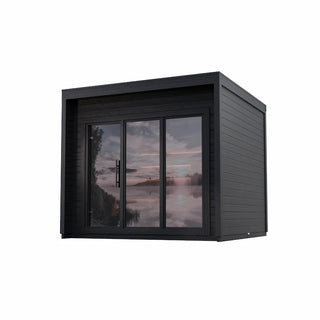
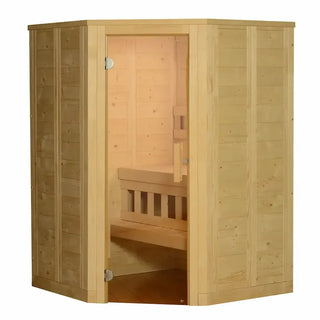
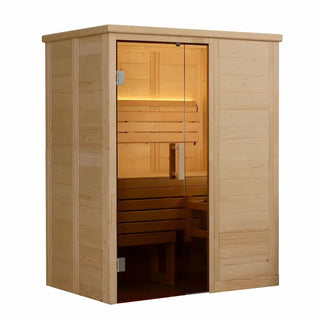
Selecting a traditional sauna is an investment in an authentic wellness culture that has been refined over centuries. We recognize that for our clients, a traditional sauna represents the gold standard of heat therapy, utilizing heated stones and steam to create an environment that generic alternatives cannot replicate. By focusing on high-density timber and precision-engineered insulation, we ensure that every traditional sauna in our collection provides the reliable performance and thermal stability required for a professional-grade home retreat.
- Superior Thermal Retention: We prioritize saunas built with insulated wall panels and thick softwood staves to ensure your traditional sauna maintains consistent temperatures while optimizing energy consumption.
- Nordic Material Integrity: We utilize premium Spruce, Thermo-Pine, and Western Red Cedar that are naturally resilient against moisture and thermal stress, ensuring your traditional sauna remains structurally sound for decades.
- Expert Electrical Configuration: We ensure every electric traditional sauna meets US residential standards, typically requiring a dedicated 240V/30-amp or 50-amp circuit for safe and rapid heating.
- Modular Installation Design: We offer saunas as pre-engineered kits that are designed for straightforward assembly, allowing us to deliver a luxury wellness sanctuary that fits seamlessly into your indoor or outdoor space.
Best Traditional Sauna Technical FAQ
Acquiring a traditional sauna involves specific technical considerations regarding electrical capacity, heat tolerance, and material longevity. We have compiled these expert answers to guide you through the planning and installation of your saunas.
How much does it cost to install a traditional sauna?
We find that a professional installation for a traditional sauna generally ranges from $3,500 to $10,000. This investment varies significantly based on the size of the unit, the premium nature of the materials, and the specific electrical requirements of your home.
Is traditional or infrared sauna better?
The choice between a traditional sauna and an infrared model depends on your wellness goals. We find that traditional saunas are best for those who prefer high ambient heat and humidity control, whereas infrared units are ideal for direct body heating at lower temperatures.
What should I consider before installing an indoor traditional sauna?
We recommend prioritizing space (roughly 8 to 12 square feet for two people), proper ventilation, and moisture control. You must also consider the wood species, heater type, and ensured access to a 240V electrical connection.
Are traditional saunas good for you?
Yes. We recognize that regular use is linked to improved cardiovascular health, detoxification through sweating, and significant stress reduction. The heat of a traditional sauna is also highly effective at relieving physical tension in muscles and joints.
Can you have a traditional sauna in your house?
We verify that indoor installations are perfectly safe as long as you account for proper drainage and ventilation. While a traditional sauna is common in modern homes, we advise avoiding vinyl windows as they may not withstand the high heat levels.
Does a traditional sauna use a stove?
Yes. A traditional Finnish sauna is heated by a specialized stove that warms stones. While wood-burning stoves offer an authentic experience for outdoor use, electric stoves provide precise control for indoor residential settings.
How do traditional saunas heat up?
In a traditional sauna, the stove heats a collection of stones which then radiate heat throughout the room. We find this creates a hot, dry environment where users can pour water over the stones to generate steam and increase humidity.
What is the best wood for a traditional sauna?
We prioritize Western Red Cedar as the premier choice for saunas due to its natural resistance to moisture and decay. However, thermally modified Spruce and Pine also offer excellent durability and thermal comfort for modern sauna construction.
How long should you stay in a traditional sauna?
We suggest a typical session should last between 15 to 20 minutes. It is vital to listen to your body and adjust your time based on heat tolerance, perhaps starting with shorter sessions of 5 to 10 minutes.
Why are traditional saunas so expensive?
Traditional saunas require more insulation, higher heating power, and robust ventilation compared to other models. The cost reflects the premium materials and technical engineering required to safely maintain high temperatures.
Can you put a traditional sauna indoors?
We recommend traditional saunas with electric stoves for indoor use, provided you have the correct electrical hookups. Wood-burning models are strictly reserved for outdoor locations due to smoke and ventilation requirements.
What is the best temperature for a traditional sauna?
The ideal temperature is a matter of personal preference. We find that many users enjoy a traditional sauna at temperatures between 150 and 175 degrees Fahrenheit, though some prefer the higher end of the spectrum.
What is a traditional indoor sauna (Finnish/dry sauna)?
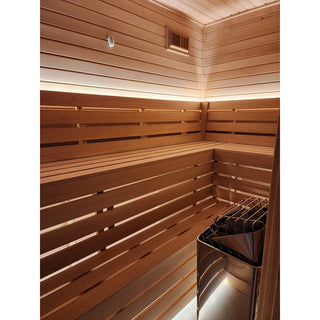
We define a traditional sauna as a wood-lined room heated by a stove that warms stones to between 150 and 195 degrees Fahrenheit. This allows for the generation of steam, or loyly, when water is added to the hot rocks.
What are the health benefits of using a traditional sauna?
We observe benefits such as improved circulation, reduced blood pressure, and mental clarity. The enhanced skin detox through sweating and muscle relaxation makes it a cornerstone of a healthy lifestyle.
How hot should a traditional sauna be?
The standard heat levels range from 150 to 195 degrees Fahrenheit. We find that many of our clients consider 180 degrees Fahrenheit to be the sweet spot for a comfortable yet effective session.
What heats a traditional sauna?
Traditional saunas are heated by a specialized stove. Whether using wood, electricity, or gas, the stove heats the rocks which radiate heat, allowing you to control humidity by pouring water over them.
How is a traditional sauna different from infrared or steam saunas?
Traditional saunas heat the air via stones at high temperatures. We contrast this with infrared saunas that heat the body directly at lower temps, and steam rooms that operate with lower heat but near 100 percent humidity.