






Sauna Heater Size & kW Calculator
Accurate sizing is critical for safety and performance. Use our Sauna Heater Sizer to determine the required Kilowatts based on your width, depth, and height, adjusted for glass and stone heat loss as well as internal or external factors. Guaranteed to deliver 175F in under 45 minutes.
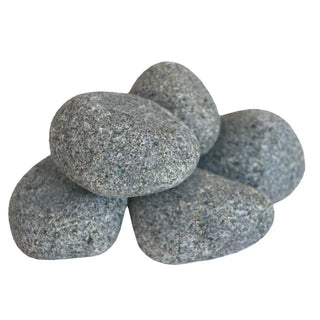
We view sauna heater stones as the primary thermal engine of the sauna, responsible for the critical transition of dry heat into the soothing steam known as Löyly. Our collection focuses on high-density igneous rocks, specifically Olivine Diabase and Peridotite, which are technically selected for their superior thermal mass and resistance to fracture. By maintaining a properly stacked rock bed, we ensure optimal convective airflow—the "chimney effect"—that protects your heating elements while delivering the soft, enveloping heat that defines an authentic Finnish experience.
- Thermal Expansion Compatibility: We prioritize stones like Finnish Olivine Diabase because their expansion coefficient matches that of sauna heating elements, preventing mechanical "crushing" during extreme temperature cycles.
- Convective Airflow Optimization: We utilize specific 2–4 inch (5–10 cm) sizing for residential heaters to maintain open air channels, verified to prevent element burnout and high-limit safety trips.
- Fracture and Glaze Resistance: Our premium Peridotite and Vulcanite stones are selected for their structural integrity, ensuring they do not "pop" or glaze over under the thermal shock of cold water application.
- Aesthetic & Thermal Versatility: From the deep jet-black finish of wet Vulcanite to the design-forward sculpted geometry of soapstone infusion loops, we offer materials that enhance both visual impact and long-lasting aroma diffusion.
- Safety-Rated Mineralogy: We strictly provide heat-rated igneous rocks free from air pockets or internal moisture, eliminating the explosion hazards associated with unverified river or landscaping stones.
The Hill We Will Die On for Sauna Stones
Maintaining a safe and efficient sauna requires a technical understanding of thermal fatigue and convective physics. We have compiled these professional answers to ensure your heater rock bed remains technically sound and structurally intact.
Why is "Olivine Diabase" the standard for sauna stones?
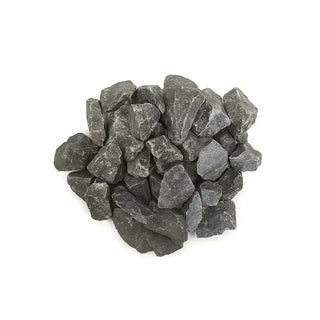
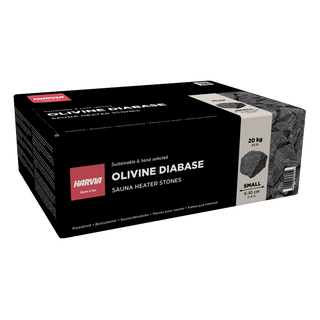
In our experience, Olivine Diabase is the premier choice due to its high thermal mass and subvolcanic density. We prioritize it because its expansion coefficient is nearly identical to heating elements, preventing the stones from crushing the elements as they cycle through intense temperatures.
What is the difference between Peridotite and Vulcanite stones?
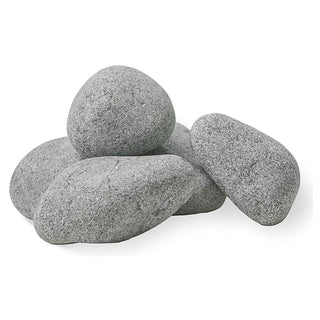
We use Peridotite for its extreme crack resistance and ability to produce "soft" heat. We suggest Vulcanite for bathers seeking a dramatic look, as these volcanic stones turn deep jet-black when wet while maintaining exceptional thermal conductivity.
Can we use rocks from our backyard or a river in a sauna?
No. We strictly caution against this as it is a major safety hazard. Backyard or river rocks often contain trapped air or moisture pockets that can expand at 400°F+, causing the stones to explode or "pop" mid-session.
Why are HUUM stones rounded instead of angular?
We utilize rounded HUUM stones to complement their open-basket heaters. The rounded geometry allows for a specific packing density that facilitates the "chimney effect" required by HUUM's unique engineering for efficient heat circulation.
Should we use "Small" or "Large" stones in our electric heater?
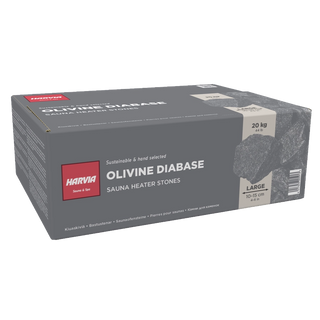
For standard US residential electric heaters (6kW–9kW), we recommend small 2–4 inch stones. We reserve large 4–6 inch stones for wood-burning units or large commercial floor models where a deeper cavity requires more structural mass.
What happens if we pack the sauna stones too tightly?
Over-packing is the primary cause of heater failure. We have verified that wedging stones too tightly blocks necessary airflow, which causes heating elements to overheat and burn out prematurely. You should always be able to see light through the stones.
How many pounds of stones do we need for a 6kW heater?
A standard wall-mounted 6kW heater typically requires one 44-lb (20kg) box. For larger floor units or HUUM DROP models, we find that 2 to 4 boxes are often necessary to fill the basket completely for proper performance.
Why is "Airflow" so important for sauna rocks?
We view airflow as the convective engine of the heater. Cool air must rise through the stones to be heated; if small or crumbled stones block this path, it will trip the "High-Limit" safety switch and disable the heater.
How often should we replace our sauna stones?
In residential settings, we recommend re-stacking stones annually and replacing them every 2–5 years. In commercial gyms, we suggest replacement every 6–12 months. If you see "gravel" at the bottom of the heater, the stones must be replaced.
What is the "Rule of Thumb" for stone replacement?
We follow the traditional Finnish rule: replace the stones as many times per year as you use the sauna per week. For most home users (2x/week), replacing them every 2 years protects the elements and maintains soft steam.
Why do our sauna stones smell like they are burning?
New stones often have quarry dust. We recommend rinsing all stones before first use. If older stones smell, we have found it usually indicates "glazing" from minerals or oils, necessitating a full replacement.
Why are our sauna stones cracking into small pieces?
This is natural "thermal fatigue." We've found that pouring cold water on 400°F rocks eventually causes micro-fractures. If stone chips are falling into the electrical box, it is a clear sign the rock bed has failed.
Why do "Soapstone" (Cubius Loop) stones stay hot longer?
We utilize soapstone (steatite) because its density and thermal conductivity are higher than standard rock. These hand-cut accents absorb heat deeply and release it slowly, which we find ideal for prolonging infusions.
How do we use "Infusion Stones" like the Cubius Loop?
We place these on the top layer of the heater. By pouring water or oils into the reservoir, the soapstone evaporates the liquid slowly, creating a steady and long-lasting scent throughout the session.
Why does the steam (Löyly) feel "harsh" or "sharp"?
If stones are too few, water hits the metal elements directly, creating a "metallic" sting. We recommend high-quality peridotite to ensure water turns to steam on the rock surface, resulting in a much softer sensation.
Can we mix different types of stones in one heater?
Yes, but with care. We often use a base of olivine diabase for storage and a top layer of Vulcanite for visuals. However, we strictly forbid mixing in soft stones like limestone, as they will crumble and destroy the heater.
Does the "25 lb Box" provide enough coverage?
We view a 25-lb box as a "top-off" or refresh kit. For new installations or a full overhaul of a standard electric heater, we recommend a 44-lb or 45-lb box as the technical minimum for safety and performance.
Are Harvia stones compatible with Finlandia heaters?
Yes. We have confirmed Harvia and Finlandia use the same engineering standards. Harvia 2–4 inch stones are the factory-specified replacement for virtually all Finlandia electric heaters.
Why should we use a "Vapor Barrier" with our sauna stones?
While stones sit in the heater, the vapor barrier (foil) protects the wall structure. We've found that proper stones prevent the heater from over-cycling, which reduces heat-stress on the walls protected by the barrier.
What is "Glazing" on a sauna stone?
Glazing is a non-porous mineral coating caused by hard water or oils. We've found that glazed stones cannot absorb water efficiently, causing them to "spit" hot water rather than producing effective steam.