












Sauna Heater Size & kW Calculator
Accurate sizing is critical for safety and performance. Use our Sauna Heater Sizer to determine the required Kilowatts based on your width, depth, and height, adjusted for glass and stone heat loss as well as internal or external factors. Guaranteed to deliver 175F in under 45 minutes.
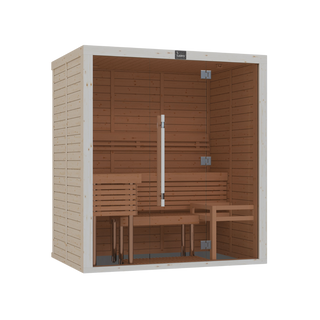
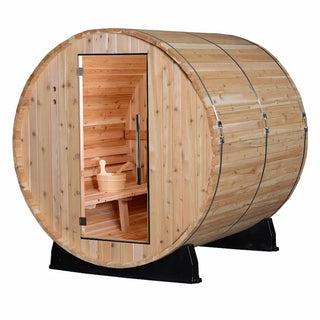
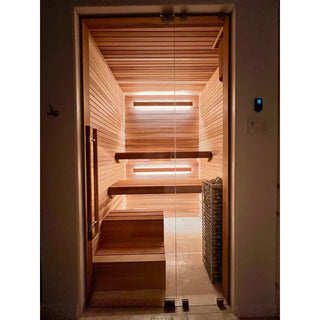
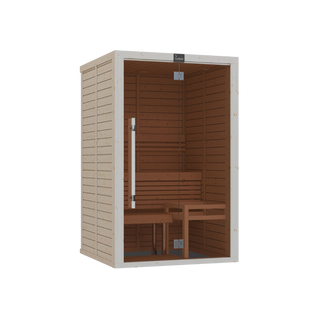
We view the dry sauna as a precision-engineered environment designed for restorative recovery through high-intensity radiant heat. Unlike high-humidity alternatives, a dry sauna prioritizes a low-moisture atmosphere, allowing for higher ambient temperatures that trigger a more intense metabolic response. Our collection is built upon decades of expertise, bringing together brands that utilize superior thermal mass—such as thermally modified spruce and aspen—to ensure your session is both efficient and deeply restorative.
- Thermal Stability and Density: We prioritize dry sauna designs that feature 1.57 inch thick wall panels to maximize insulation and ensure that the radiant heat remains trapped within the cabin.
- Nordic Material Purity: We utilize specialized timbers such as ThermoWood that have been treated with only heat and steam, resulting in wood that is denser than standard spruce and inherently resistant to rot.
- Advanced Airflow Engineering: We ensure every dry sauna in our collection features adjustable ventilation systems and under-wall gaps to maintain fresh, oxygen-rich circulation without losing heat.
- Precision Leveling Systems: Our indoor units feature adjustable feet to ensure your dry sauna remains stable and safe on any residential surface, from finished basements to home gym flooring.
Best Dry Sauna Ownership FAQ
Selecting the right dry sauna involves understanding site preparation, electrical infrastructure, and material performance. We have compiled these expert answers to guide your wellness investment.
Are dry saunas worth it?
We find that regular dry sauna sessions offer significant benefits, particularly for individuals seeking relief from chronic fatigue or muscle tension. Research indicates that the consistent heat of a dry sauna can also support respiratory health and provide relief for specific skin conditions like psoriasis.
How much does it cost to put a dry sauna in your house?
The cost to install a dry sauna in your home typically ranges from $6,000 to over $11,000. This investment depends heavily on the cubic volume of the unit and the chosen materials, with traditional electric models generally sitting at a different price point than infrared alternatives.
Do you need ventilation for a dry sauna?
Yes. Proper ventilation is critical for any dry sauna to ensure a safe and comfortable experience. We ensure that natural airflow circulation is incorporated into the design of every room we sell, as vents play a vital role in maintaining air quality.
What are the electrical requirements for a dry sauna?
Most dry sauna heaters require a 220V or 240V hard-wired connection. For common 4.5kW or 6.0kW heaters, we require a 30-amp breaker and 10/2 wire. If your unit is positioned more than 30 feet from the breaker box, an upgrade to 8/2 wire is necessary to prevent voltage drop.
What are the benefits of a dry sauna?
A dry sauna is engineered to improve circulation, relax muscles, and relieve stress through intense sweating. We find that many users prefer dry heat because it is often easier to tolerate for longer recovery sessions compared to high-humidity steam environments.
Do you have to clean a dry sauna?
Yes. Regularly cleaning your dry sauna is a must to prevent an unpleasant or unhygienic environment. We suggest a consistent maintenance routine to keep the wood surfaces healthy and the air fresh.
Does a dry sauna need a floor drain?
While it is a dry environment, saunas still generate humidity through user perspiration and occasional steam. We recommend a drain to help remove any excess water accumulation on the floor, preventing puddles and maintaining the integrity of the base.
Where is the best place to put a sauna in your house?
We find that basements, garages, and spare rooms are the most popular choices due to their accessibility and privacy. For those with ample space, a bathroom provides excellent convenience for cold rinsing after a session.
What temperature should a dry sauna be?
A traditional dry sauna should ideally operate between 150 and 195 degrees Fahrenheit. We recommend that beginners start at the lower end of this range with shorter sessions until they become accustomed to the environment.
What is better, a dry or humid sauna?
This depends entirely on your preference for relaxation. If you enjoy a gentle, moist heat, a wet sauna is ideal. However, if you prefer a high-heat, low-humidity environment for intense sweating, we suggest opting for a dry sauna.
Is it better to go to a dry or wet sauna?
We recommend entering any sauna with clean, dry skin. Drying off well before entering a dry sauna ensures that the sweating effect starts earlier and is much stronger, maximizing the physiological benefits of the session.
How long should you stay in a dry sauna?
For a healthy individual, a typical dry sauna session should last between 15 and 20 minutes. It is crucial to listen to your body and exit immediately if you feel lightheaded or uncomfortable.
Can you put a dry sauna in your house?
Yes. Installing a dry sauna inside a house is common throughout Nordic countries and North America. As long as adequate ventilation is provided, these units can be safely integrated into most indoor rooms.
What features should I look for in the best dry sauna?
We suggest prioritizing high-quality wood like Canadian Cedar or Thermo-Spruce, a reliable heater type, and ease of installation. Electric heaters offer the most convenience for indoor use, while wood-burning options provide a more traditional experience.
Can you have a dry sauna indoors?
Traditional dry saunas with electric stoves are suitable for both indoor and outdoor use. We find that the electric heater configuration is the primary requirement for a safe indoor setup, provided you have the proper electrical hookups.