


Image © HUUM, Unsplash+
Let's talk about the soul of the sauna. People get fixated on the heater, the type of wood, the fancy lighting. They're important. But they are just the supporting cast. The star of the show, the element that truly makes or breaks a traditional sauna experience, is the stones. They are the battery. They are the engine of the steam. They are the silent, stoic heart of the room.
We’ve seen beautiful, expensive saunas ruined by bad rocks, and we’ve seen simple saunas transformed into temples of steam by the right ones. Our goal here is to give you a practical, hands-on look at what separates a great sauna from a lukewarm box of disappointment. It all starts, and ends, with the rocks.
The Science of the Stone: Why Not Just Any Rock Will Do
This is the fundamental choice you have to make. And it's a choice that will define every single session you have in your sauna, as well as the lifespan of your heater. It’s not just about finding a "rock that gets hot." It's about finding a material that can withstand incredible, repeated thermal stress without failing.
Proper sauna stones are made from a specific type of igneous rock, most commonly olivine diabase. This material is born from volcanic fire. It's incredibly dense, non-porous, and has a very high specific heat capacity. In plain English, that means it's fantastic at absorbing, storing, and safely radiating a massive amount of heat. When you ladle water on a bed of these stones heated to 500°F or more, they don't just create steam; they create a soft, full-bodied, nourishing wave of steam—what the Finns call *löyly*. This is the difference between a real sauna and a poor imitation.
| The Factor | Quality Sauna Stones (Olivine Diabase) | Generic Landscape or River Rocks |
|---|---|---|
| The Material | Dense, non-porous igneous rock. Born from fire, specifically selected and tested to hold and release immense heat safely without fracturing. | Porous landscape rocks, sedimentary river stones, or other random rocks that can contain hidden moisture, air pockets, and even harmful minerals like asbestos or sulfur. |
| The Steam | Produces a deep, soft, satisfying steam (*löyly*) when water is applied. The heat radiates evenly and powerfully. | Produces a weak, hissing, unsatisfying steam, or worse, can crack, crumble, or even explode under thermal stress. |
| The Lifespan | Lasts for 1-2 years of regular residential use before needing to be replaced. Degrades predictably into smaller, clean pieces. | Crumbles quickly into a dense, gritty dust that chokes your heater's airflow and can damage the internal components. |
| The Result | A powerful, reliable sauna experience and a long, healthy life for your heating elements. | A frustrating, weak sauna experience, a suffocated heater with prematurely failed elements, and a potential safety hazard. |
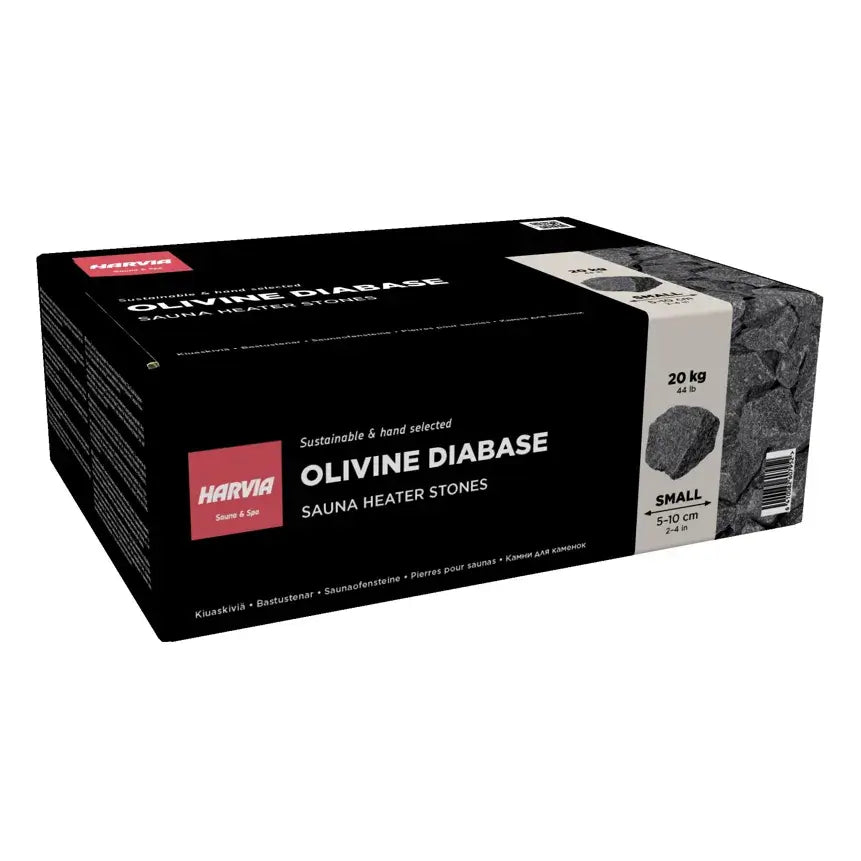
Harvia Olivine Diabase Sauna Stones
The traditional workhorse stones, designed for a sharp, intense, and satisfying steam experience.
A Critical Warning: The "Any Rock Will Do" Myth
We have to be very direct about this. This is the single most dangerous myth in the sauna world. You will see people on forums and in Facebook groups saying, "Just grab some rocks from your backyard! It's all the same!" Do not do this. Ever.
We got a call from a client once, and he was genuinely shaken. He was enjoying his new sauna when he heard a loud *crack*—not a boom, but a sharp, percussive sound like a gunshot—and saw a spark shoot out of the heater. He thought the heater had short-circuited and exploded. We went out there, and after everything had cooled down completely, we started carefully removing the stones. We found the culprit. He had supplemented the official Harvia stones with a few "really cool looking" smooth, gray ones he found on a riverbank. One of them had a nearly invisible hairline fracture with trapped moisture deep inside. When it got superheated to several hundred degrees, that tiny drop of water flashed to steam. The pressure inside the rock built up instantly and split it in half with incredible force. He was lucky it didn't damage an element or send a shard flying out of the heater. It was a terrifying, and completely avoidable, situation. Never, ever use rocks that are not specifically quarried, tested, and sold as sauna stones.
Angular vs. Rounded Stones: Choosing Your Steam's Personality
Even within the world of proper sauna stones, you have a choice to make that affects the character of your steam. This isn't a matter of quality, but of preference for the *type* of steam you enjoy most.
- Angular Stones: These are the traditional choice. They are split, not tumbled, and have a large, fractured surface area. This creates a sharper, more immediate, and more intense steam when water hits them, as it vaporizes very quickly over the wide surface. The gaps between the angular stones also promote excellent airflow, which is great for heater efficiency. They are the workhorse stone for a classic, invigorating sauna experience.
- Rounded Stones: These are more of a modern, aesthetic choice, popularized by design-forward heaters like HUUM and the Harvia Spirit. They are tumbled to be smooth and uniform. Because of their lower surface area, the water tends to trickle down deeper into the stone pile before turning to steam. This creates what many people describe as a softer, gentler, more humid steam that rises more slowly and lingers in the air. The trade-off is that they can pack more tightly, so extra care must be taken to ensure you leave adequate air gaps when stacking them.
There is no "better" choice here. It's a decision between a sharper, more immediate steam (angular) and a softer, more enveloping steam (rounded). Your preference is the only thing that matters.
The Non-Negotiable Ritual Your Heater Depends On
The stones are the hardest working part of your sauna. They are not a "set it and forget it" component. They are a consumable, and they require maintenance. The constant, extreme heating and cooling cycles—thermal shock—breaks them down over time. We tell every single one of our clients they need to perform a full stone service once a year.
Here's our process:
- Let the sauna cool completely. We mean overnight cold. This is a critical safety issue. Never work on a warm heater.
- Get your tools. You'll need a bucket, some work gloves, and a shop vacuum. It's a dusty job, so a mask is a good idea.
- Remove every single stone. Carefully take them out one by one and place them in the bucket.
- Inspect each one. This is the important part. Look for deep cracks. Look for flakiness or crumbling edges. A good test is to tap two stones together; a solid one will have a sharp "clink," while a failing one will have a dull "thud." Be ruthless. If a stone looks weak or damaged, discard it.
- Clean the heater's guts. While the stones are out, use your shop vac to clean out the bottom of your heater. You will be absolutely amazed at the amount of stone dust, grit, and sediment that accumulates down there. This is the material that suffocates heating elements and causes them to fail prematurely.
- Restack and replace. Restack the surviving stones loosely back in the heater, and top it off with a new box of stones to replace the ones you discarded. This ensures your heater is full and has plenty of thermal mass.
This annual ritual is the single best thing you can do to ensure your sauna performs at its peak and to protect your expensive heating elements from damage.
A client called us complaining of "weak steam" from his 3-year-old Harvia Cilindro. The heater was getting hot, but when he'd ladle water on, he'd just get a weak hiss instead of a satisfying roar of steam. We went out there, and he admitted he'd never touched the stones since the initial installation. After it cooled, we emptied it. The bottom half of the heater cage was practically a solid block of stone dust and crumbled rock, like a kind of sad, gritty concrete. The lower heating elements were completely choked and couldn't breathe. We vacuumed it all out and did a full stone replacement. He called us the next day, and the relief in his voice was palpable. "It's like a brand new sauna," he said. "The steam is incredible." That's the tangible difference proper stone maintenance makes.

Our Pro Tip: When you're stacking your stones for the first time or after cleaning, don't just dump them in from the box. Take your time. Place the larger stones at the bottom, creating a solid but not-too-tight foundation around the heating elements. As you move up, use the smaller stones. The key is to avoid letting the stones wedge the heating elements together. The elements need to stay parallel, with space between them. A well-stacked heater breathes better, heats more efficiently, and will make your elements last much, much longer.
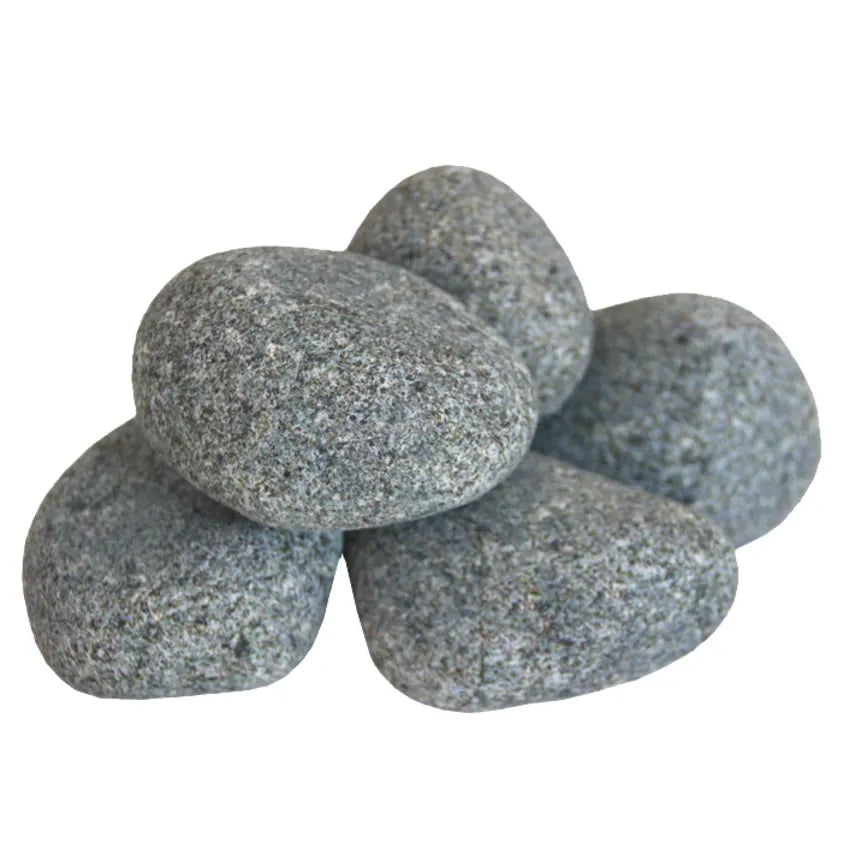
Harvia Rounded Sauna Stones
The artist's choice. These smooth stones produce a softer, gentler steam and are perfect for design-forward heaters.
Final Verdict: Respect the Rocks
You have to think of your sauna stones like the tires or oil in your car. They do a hard job, they wear out, and they are critical to performance and safety. A residential user should plan on completely replacing all of their stones every 2-3 years. A heavy, daily user should do it every year without fail. It's a small investment that pays huge dividends in performance and heater longevity.
Over the years, we've noticed a clear and undeniable pattern. The clients who have the fewest problems with their heaters—especially with premature element failures—are the ones who are meticulous about their annual stone service. They treat it like a non-negotiable part of owning a sauna. The clients who call us with frustrating performance issues or dead elements are almost always the ones who haven't touched their stones in years. The correlation is undeniable. The health of your stones is directly tied to the health of your heater. Treat your stones with respect, and they will reward you with years of incredible, soul-soothing steam.
Need Help?
Questions about sizing, placement, or maintenance? Our team will help you choose and set up the right solution for your space—talk to a specialist in minutes.
Prefer to talk? 931-516-6577 • Or use our contact page.