



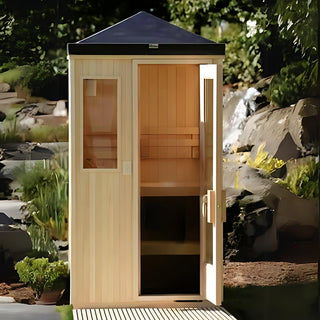
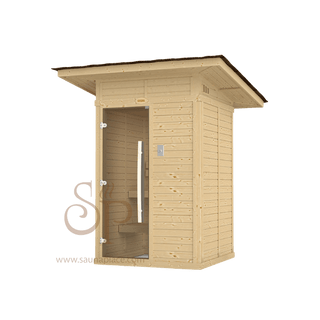
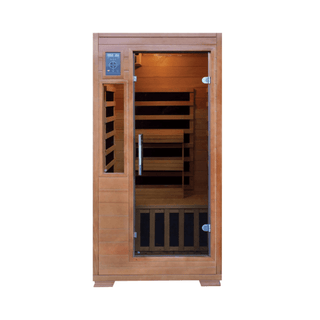
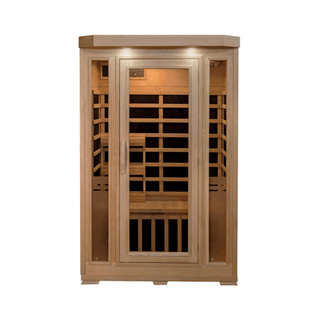
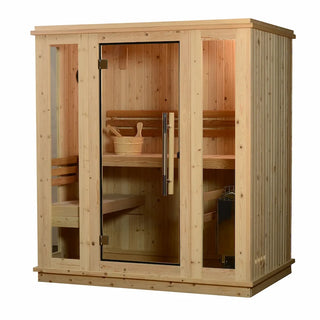

A 2 person sauna is the sweet spot for shared relaxation: enough room for two adults to sit comfortably (or for one person to stretch out), without the larger footprint, longer heat-up, and higher operating costs that come with big multi-person cabins. In real installations—spare rooms, basements, home gyms, patios, and backyards—2 person saunas are popular because they warm up efficiently, maintain stable temperatures with less air volume to heat, and fit naturally into everyday layouts. This collection includes indoor and outdoor options across traditional dry heat, infrared, and modern “design-forward” builds—so you can choose the feel you want (classic löyly-style steam over stones, gentle infrared warmth, or a hybrid approach) while keeping performance and durability front and center.
- Right-Sized Comfort: Built for two adults with bench layouts that stay comfortable for shared sessions and practical for solo use.
- Indoor + Outdoor Coverage: Includes compact indoor cabins and weather-oriented barrel/outdoor models designed for real-world placement.
- Heat-Type Flexibility: Traditional dry heat for higher temps and steam, infrared for lower-temp long sessions, and options that lean modern in controls and design.
- Material Choices That Matter: Spruce, ThermoWood®, hemlock/hemfir, thermo-aspen, and CLT are selected to handle heat cycles and moisture responsibly.
- Smarter Ownership: Modular kits simplify assembly, while proper ventilation clearances and correct electrical planning reduce long-term headaches.
- Consideration: Glass-heavy or architectural models look incredible, but they can increase heat loss—so heater sizing and placement become more important.
Comparing 2 Person Saunas in This Collection
We’ve compared the key 2 person saunas and near-2-person models you shared below, focusing on heat type, placement, materials, and the practical “why it matters” details that affect daily use, comfort, and long-term ownership.
| Model | Heat Type | Indoor / Outdoor | Shape / Style | Primary Material | Key Practical Advantage |
|---|---|---|---|---|---|
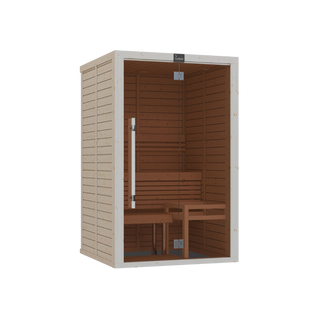
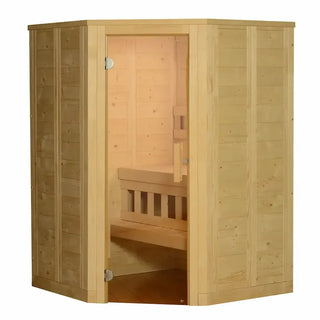
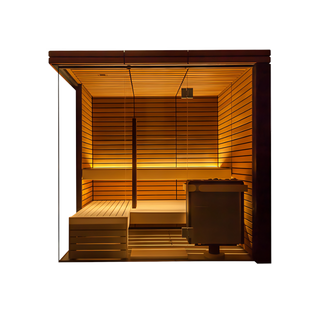
| Heritage Lux Glass 2 Person Sauna | Traditional Dry (heater sold separately) | Indoor | Cabin / Modern glass front | Spruce + clear tempered glass | Insulated walls help retain heat; full-glass front keeps the room feeling open while maintaining a compact footprint. |
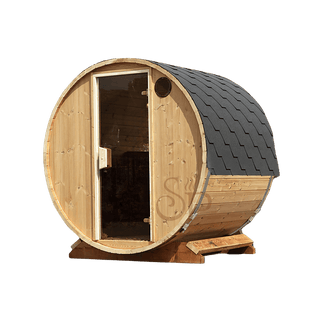
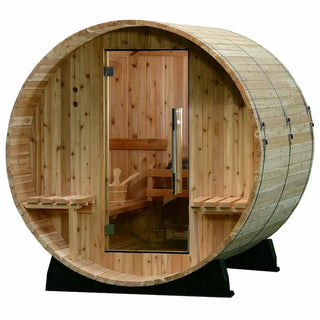
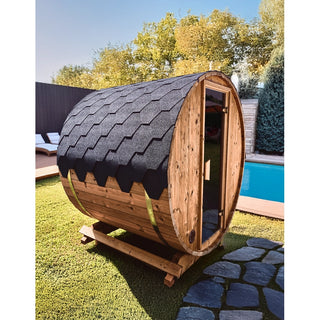
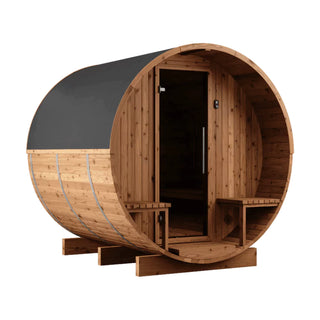
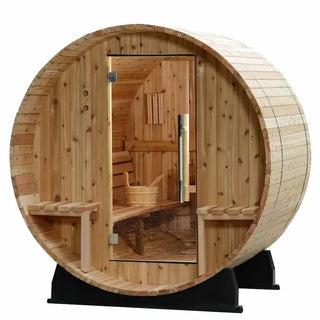
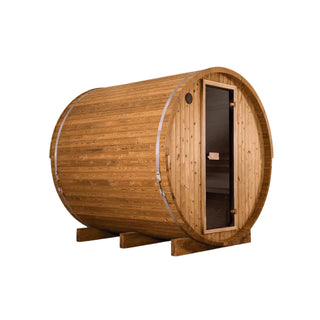
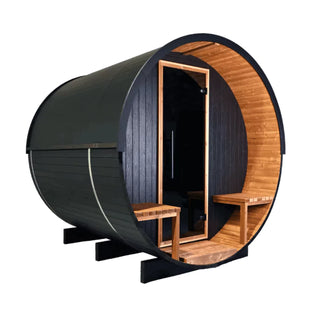
| Almost Heaven Salem 6′ × 4′ Barrel Sauna | Traditional Dry (Harvia 6kW electric) | Indoor / Outdoor capable | Barrel | Ball-and-socket lumber + tempered glass | Efficient barrel geometry supports quick warm-up; flexible placement makes it a practical “first outdoor sauna” size. |
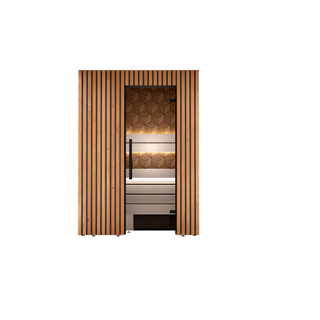
| Leil Como 2-150 Indoor Sauna | Traditional Dry (heater sold separately) | Indoor | Cabin / Nordic modern | ThermoWood® + Aspen | Ventilation-forward design (adjustable ceiling vent + airflow under walls) supports comfort and fresher-feeling sessions. |
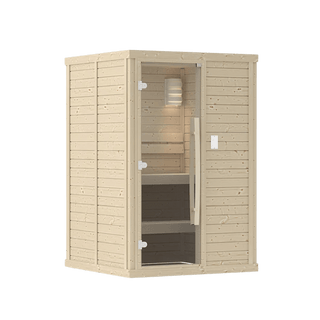
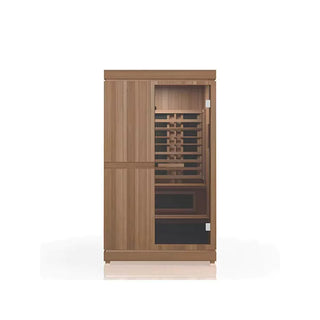
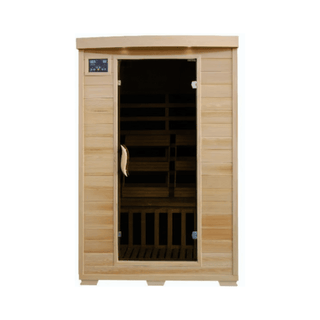
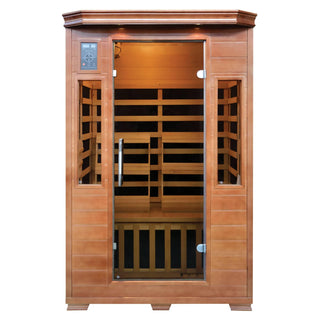
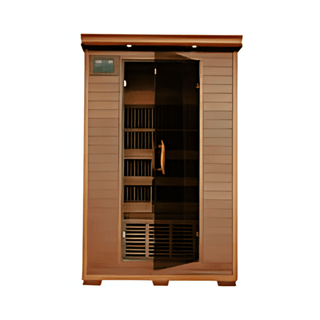
| Coronado 2-Person Carbon Infrared Sauna | Infrared (carbon) | Indoor | Cabin | Hemlock | Lower operating temps with longer sessions; simple controls and quick assembly for easy indoor ownership. |
| Thermory Barrel 54 – Ignite (wide back window) | Traditional Dry | Outdoor | Barrel | Thermally modified Nordic spruce | Thermal modification improves dimensional stability and outdoor durability; large stone-heater pairing supports softer steam texture. |
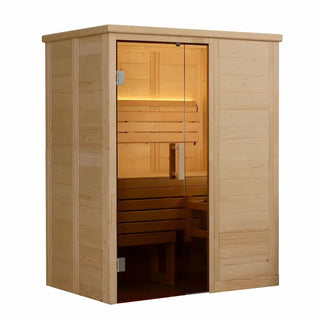
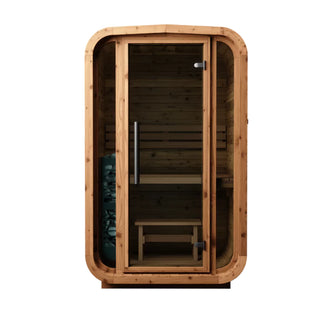
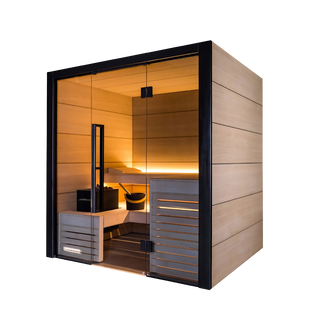
| Heritage Lux Luce (1–2 person) | Traditional Dry (electric heater compatible; sold separately) | Indoor | Modern cube | Special-dried pine + Thermo Pine benches | Extra height improves stand-up comfort and headroom; tinted glass door offers a cleaner, more private look. |
| Heritage Bosco Indoor Sauna | Traditional Dry (heater not included) | Indoor | Cabin / compact classic | Nordic spruce (element-wall system) | Element-wall construction supports fast heat-up and efficient retention—ideal for consistent weekday use. |
| Norkke Shadow Indoor Sauna (2–3 person) | Traditional Dry (electric heater compatible; sold separately) | Indoor | Architectural / privacy-forward | CLT + thermo-aspen interior | Half-wood/half-glass door + side-facing benches create a more secluded feel without sacrificing light or design clarity. |
Most Common Questions About 2 Person Saunas
Below are the most common questions we hear when people shop for 2 person saunas—covering typical sizing, indoor vs. outdoor suitability, electrical planning, warm-up expectations, comfort, energy use, assembly time, and longevity. The answers focus on practical ownership details so you can choose a 2 person sauna that fits your space, your heat preference, and how you’ll actually use it week to week.
What are the average dimensions (size) of a 2-person sauna?
Most 2 person saunas are designed around a compact footprint close to 4 ft × 4 ft (about 48 in × 48 in), with heights commonly around 6–7 ft. That size is intentional: it provides comfortable side-by-side seating while keeping the air volume small enough for faster warm-up and easier temperature stability. Always plan for a few inches of clearance around the cabin for assembly and safe airflow.
Can we use a 2-person sauna outdoors?
Yes—if the model is built and rated for outdoor exposure. Outdoor-ready 2 person saunas typically use weather-oriented materials and designs (like barrel staves, thermally modified wood, proper roofing/rain protection, and exterior hardware suited for moisture). Indoor-only units should stay indoors because routine weather exposure can shorten lifespan and increase maintenance.
Can a 2-person sauna fit in a small bedroom or closet?
In many homes, yes. A 2 person sauna is often chosen specifically because it can fit in spare rooms, basements, home gyms, or larger bathrooms. The key is measuring not only the final footprint, but also doorways, turns in hallways, and the assembly clearance around the unit. Ventilation and electrical access should be planned before delivery.
Is a 2-person sauna too small to be comfortable?
For two people sitting upright, it’s designed to feel cozy rather than cramped. Many buyers like a 2 person sauna because it’s comfortable for couples, but also gives a single user “luxury space” to sit cross-legged or change positions. Bench layout matters: L-shapes, two-tier benches, and deeper benches can make the cabin feel noticeably more relaxed.
Is it safe to put a 2-person sauna on carpet?
It can be safe, especially for infrared models, but a hard, level surface is usually the best long-term choice. A protective base helps keep the unit level, reduces moisture risk from cleaning or sweat, and simplifies maintenance. If carpet is the only option, using a protective mat and keeping the area dry and well-ventilated helps prevent odor or moisture issues over time.
Does a 2-person sauna require a 240V hookup?
It depends on heat type. Many 2 person infrared saunas are designed to run on standard household power (often 120V), while traditional electric 2 person saunas commonly require a dedicated 240V circuit sized to the heater’s kW rating. For traditional heaters, a licensed electrician is the right move to ensure proper breaker sizing, wire gauge, and code-compliant installation.
What is the typical energy usage (cost) for a 2-person sauna?
Energy use is largely driven by heat type, heater size, insulation, and session length. Infrared 2 person saunas typically draw less power and can be cost-efficient for longer sessions at lower temps. Traditional electric saunas often use higher kW heaters and may cost more per session, but sessions are usually shorter and can include steam (löyly) by ladling water over stones. Your local electricity rate and how often you sauna will determine real monthly costs.
How long does a 2-person traditional sauna take to heat up?
With correct sizing and decent insulation, a 2 person traditional sauna commonly reaches classic sauna temperatures in roughly 30–45 minutes. Warmer ambient rooms, tighter door seals, and good airflow design help. Glass-heavy designs can take longer or require a slightly larger heater because glass and stone surfaces increase heat loss.
Should we buy a 2-person traditional or infrared sauna?
Choose traditional if you want higher air temperatures, the ability to create steam by pouring water on hot stones, and that classic Finnish-style heat cycle. Choose infrared if you prefer gentler ambient air temps, longer sessions, and simplified electrical/installation in many homes. A “hybrid” style can be a good fit if you want flexibility, but it’s worth confirming the exact heater/panel configuration and electrical needs before purchasing.
What is a 2-person 'Hybrid' sauna?
A hybrid sauna combines infrared heating panels with a compact traditional electric heater (with stones) in the same cabin. The practical benefit is choice: you can do a low-temp infrared session on some days and switch to traditional heat (with optional steam) on others. Because you’re combining systems, hybrid units can have more complex electrical requirements and should be planned carefully.
Is it cheaper to install a 2-person sauna indoors or outdoors?
It depends on your site. Indoor installs can be simpler if power is nearby and the space is ready, while outdoor installs may need a proper base, weather protection, and longer electrical runs. Outdoor-ready models are built for exposure, but the total installed cost can rise if you need new circuits, trenching, or a dedicated pad. Planning the full path—site prep, power, and protection—gives the most accurate comparison.
How long does it take two people to assemble a 2-person sauna kit?
Many modular 2 person sauna kits can be assembled by two people in about 3–6 hours, depending on complexity, bench system, and how the panels lock together. The slowest step is often electrical for traditional heaters, which should be completed by a licensed electrician. Pre-planning layout, clearances, and tool access can reduce assembly time significantly.
What is the expected lifespan of a quality 2-person sauna?
With normal care—basic cleaning, proper ventilation/drying between sessions, and correct installation—an indoor 2 person sauna can often last 20–25+ years. Outdoor models vary more by climate and material: thermally modified wood and cedar generally handle exposure better, but consistent protection (roofing/rain jacket, good drainage, and periodic maintenance) is what preserves longevity.
What is the heaviest component of a 2-person sauna kit?
The glass door and the larger wall panels are commonly the heaviest items to move and position, especially on tight staircases or narrow hallways. Traditional heaters and stone boxes can also be heavy, but they’re usually installed after the cabin is assembled. Planning the delivery path and having two strong helpers (or a dolly) makes the process much smoother.